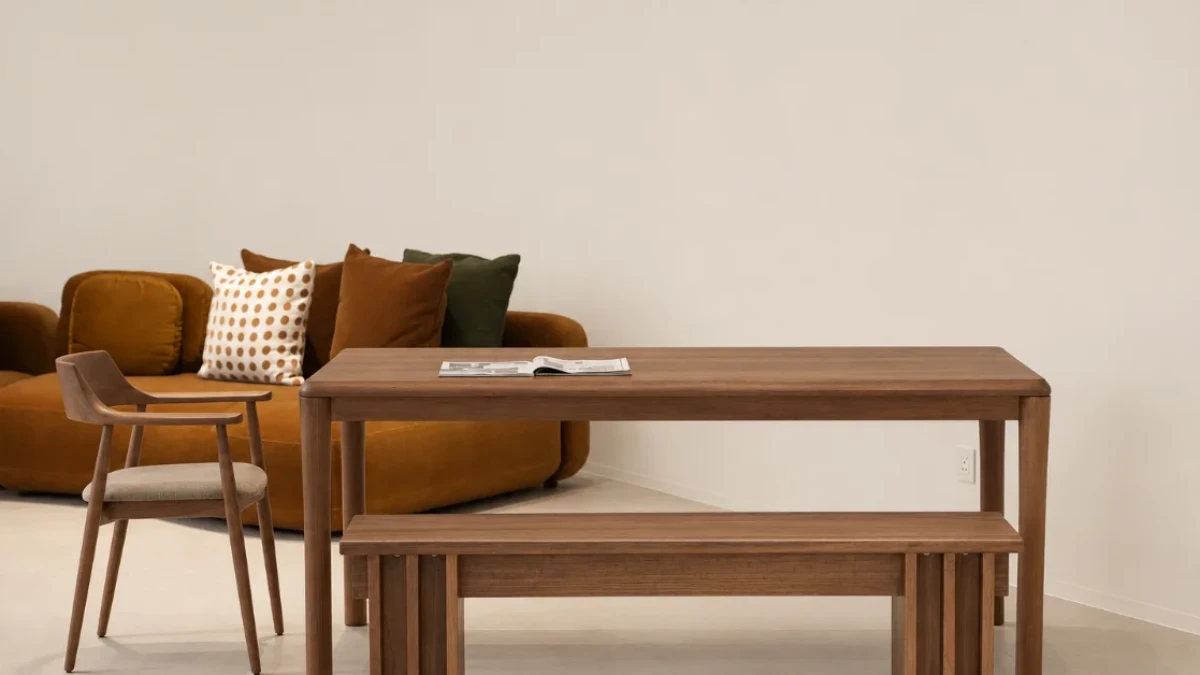
A custom-made piece of furniture may look simple, but every dimension and detail needs careful thought. Before production begins, someone needs to work out how the parts fit together, how the structure supports weight and how the finished piece will feel and function in everyday use.
That planning takes knowledge, experience and time.
At NICCHRIS in Sungai Buloh, furniture design and in-house production bring together decisions about proportions, materials, comfort and construction. Each piece made to specific requirements needs these details considered as a whole.
Understanding the work behind custom-made furniture begins with the thinking that happens before the first material is cut.
Why Custom-Made Furniture Costs More Than You Think
A custom-made sideboard may look simple from the outside. A clean top, a few doors, perhaps a row of drawers. But before anyone cuts the first panel, someone needs to work out how every part will fit, move and support the furniture.
That thinking is part of the cost.
At NICCHRIS in Sungai Buloh, furniture design and production involve decisions about proportions, materials, construction and everyday use. When a piece is made to specific requirements, those decisions need to be considered for that particular order.
Understanding what happens before and during production helps explain why custom-made furniture carries its price.
Every Measurement Affects Another
The overall dimensions of custom-made furniture are only the starting point. Each measurement affects the space, comfort and support available within the design.
For a dining table, the top’s length and width need to work with the base placement, allowing enough legroom and space for chairs. The height must also account for the tabletop’s thickness and any supporting frame beneath it.
For a sofa, the overall depth includes the backrest and frame, so it differs from the usable seat depth. Seat height, cushion thickness and backrest angle need to work together for comfortable sitting.
Storage furniture requires similar planning. Panel thickness, dividers, hinges and drawer runners all take up space, affecting how much usable storage remains inside.
These calculations help turn the requested dimensions into a piece that works in everyday use.
Changes in Size Can Change the Construction
Adjusting a piece’s dimensions can require changes to its proportions, structure and components.
A longer dining table may need additional support or a different base position. A wider bed frame may require a revised centre support system. Making a sofa more compact can mean adjusting its armrests, cushions and frame to preserve comfortable seating.
The maker needs to revisit the design, recalculate measurements and check how each adjustment affects the whole piece before production begins.
This is why a smaller custom-made piece can still involve substantial work. It may use less material, while planning, tool setup, assembly, upholstery and finishing still require time, depending on the design.
Materials Need to Suit the Design
Material selection also involves judgment.
Solid wood has natural grain variation and movement that need to be considered in construction. Wood veneer allows different design possibilities, including broad surfaces and carefully arranged grain patterns. Its performance depends on the substrate, bonding, edge treatment and finishing.
Both can be appropriate choices for well-made furniture.
The decision should suit the piece’s proportions, intended use, construction and desired appearance. Different materials also require different preparation and production methods, which affect the work involved.
One Order Carries Its Own Preparation Costs
Producing furniture in quantity allows certain costs to be shared across many pieces. Drawings, cutting plans, templates and machine settings can be reused.
A custom order may require those preparations for a single piece.
Materials need to be planned and purchased, cutting layouts prepared, and tools set up for the required dimensions. Particular shapes or details may also need templates, samples or trial assemblies.
The workshop time starts before the furniture begins to take shape.
Finishing Takes Time Too
After assembly, the piece still needs surface preparation and finishing.
Edges need attention. Doors and drawers need adjustment. Visible surfaces need to be checked, and the finish needs time between the relevant preparation and coating stages.
A simple-looking sideboard can be demanding because its uninterrupted surfaces and repeated lines make inconsistencies easy to notice. Uneven gaps or poorly aligned fronts can affect the appearance of the whole piece.
Achieving that clean result takes care throughout production.
What You Are Paying For
The price of custom-made furniture includes materials, hardware, labour and finishing, along with the knowledge needed to bring those elements together.
It includes someone thinking through how a drawer opens, how a shelf carries weight, how a door clears the adjoining panel and how the proportions will look in your room.
At NICCHRIS in Sg Buloh, our in-house production keeps design decisions closely connected to the making process. For customers discussing a piece with us, the dimensions, intended use and available options help establish what the furniture needs to do.
A finished piece may look effortless. Getting it there takes planning, calculation and skilled hands.