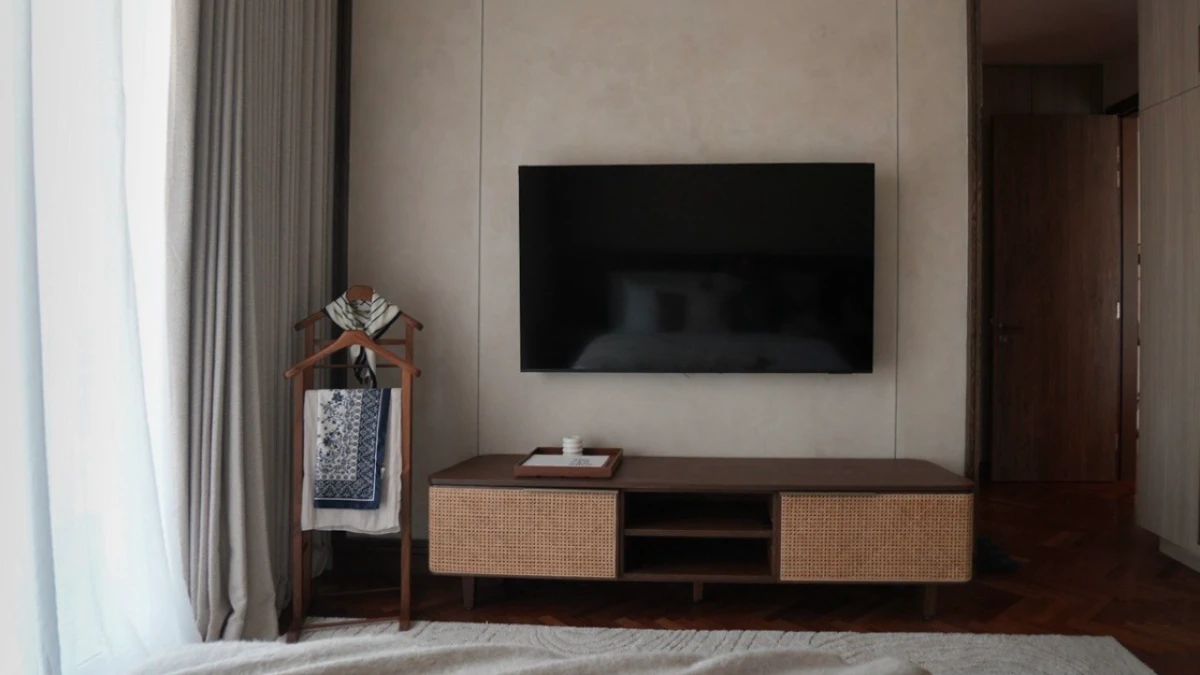
A modern TV cabinet works best when it is slightly wider than your screen, low enough that the picture sits near eye level, and built with sealed finishes that hold up in a humid home. Get those three things right and the unit will look intentional for years rather than dated within a season. This guide walks through sizing, floating versus floor-standing designs, cable and storage planning, and the materials that age well, so you can choose a modern TV cabinet with confidence.
How Do You Size a Modern TV Cabinet to Your Wall and Screen?
Start with your seating distance, then size the screen, then size the cabinet. Independent home theater guidance based on SMPTE standards suggests multiplying your viewing distance in inches by 0.65 to find a comfortable screen size, while the more cinematic THX approach multiplies by 0.835 (Kaleidescape). At a typical 120-inch sofa distance, that points to a screen around 78 inches by the SMPTE figure.
Once the screen is set, the cabinet should be wider than the TV. A few inches of clearance on each side keeps the proportions calm and leaves room for a soundbar. A cabinet that matches or slightly exceeds the TV width reads as deliberate, while a narrow unit under a large screen looks top-heavy.
Height matters as much as width. Mounting guides place the screen center around 42 inches from the floor, which is close to seated eye level on a standard sofa, and advise keeping the viewing angle within about 15 degrees of horizontal to avoid neck strain and picture distortion (HelloTech). Measure from your sofa seat up to your eyes, then pick a cabinet height that lands the screen center in that zone.
If you are planning a full living room refresh, cabinet proportions should echo your other pieces. Our guide to living room furniture ideas for Malaysian homes covers how to balance scale across the sofa, coffee table and media wall.\
Should You Choose a Floating or Floor-Standing Design?
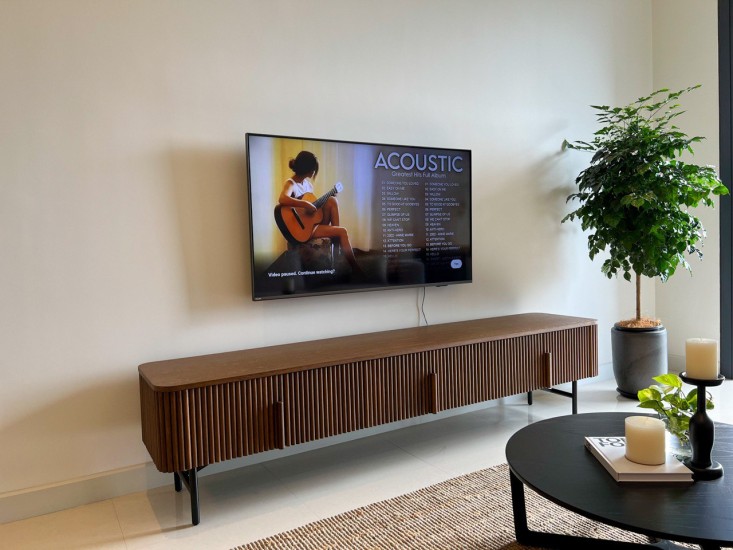
The choice comes down to floor space, storage needs and TV weight. Floating cabinets mount to the wall and leave the floor open underneath, which makes a room feel larger and turns cleaning into a single sweep rather than a reach-behind chore. Floor-standing units sit on legs or a plinth, hold more weight comfortably, and need no wall anchoring.
Floating designs suit smaller rooms and minimalist interiors. Because the wall carries the load, a well-mounted floating cabinet can hold a large TV as long as the brackets are rated and fixed into studs or solid masonry. The visual lightness is the main draw: nothing interrupts the floor line, and skirting stays visible.
Floor-standing cabinets win on storage and stability. A deeper carcass holds consoles, soundbars and media without straining a wall fixing, and the unit can be moved when you rearrange. For households with children or in rentals where drilling is restricted, a floor-standing piece is the practical pick.
Many modern units blur the line, pairing a floated main body with discreet support feet. If you are weighing fixed versus freestanding more broadly, the trade-offs mirror those you face when choosing any anchor piece: freestanding wins on flexibility, fixed wins on a cleaner floor line.
What Are the Best Cable Management and Storage Tips?
Plan cable routing before you buy, not after. A tidy media wall depends on three things: a path for cables to reach the TV, ventilation for devices, and enough closed storage to hide the clutter that always accumulates. The cabinet you choose should support all three.
Look for rear cut-outs or grommets that let cables drop straight down from a wall-mounted TV into the cabinet. If the TV sits on top, a slot at the back panel keeps the HDMI and power runs out of sight. For wall-mounted screens, an in-wall cable conduit gives the cleanest result, though a surface raceway painted to match the wall works where drilling is limited.
Ventilation protects your electronics. Set-top boxes, consoles and amplifiers all generate heat, so open-backed compartments or vented panels prevent a sealed cabinet from cooking its contents. Mix open shelving for devices that need airflow with closed drawers for discs, controllers and the inevitable tangle of spare cables.
Storage should match how you actually live. Drawers hide small items better than open cubbies, and a run of low drawers along a floating unit keeps the surface clear. Measure your largest device before committing to shelf heights, because a console that does not fit its slot defeats the whole plan.
Which Materials and Finishes Age Well in a Humid Home?
Finish quality decides longevity more than the raw material does. In a tropical climate, the enemy is moisture working into unsealed surfaces and edges, so a cabinet with every face sealed, including the underside and back edges, will outlast one built from a nobler timber but finished only where it shows.
Solid timber brings warmth and can be refinished when it marks, but it moves with humidity and needs stable conditions to stay flat. Engineered panels built from cross-laminated layers resist that movement better, which is why many quality modern cabinets use a stable engineered core under a real-wood veneer or a durable laminate. The core stays dimensionally calm while the surface delivers the look.
Finishes to favor include matte and satin lacquers that hide fingerprints, veneers over stable cores, and powder-coated or anodized metal for legs and frames. Finishes to approach with caution include high-gloss surfaces that show every smudge and cheap foil wraps that peel at the edges once humidity creeps in.
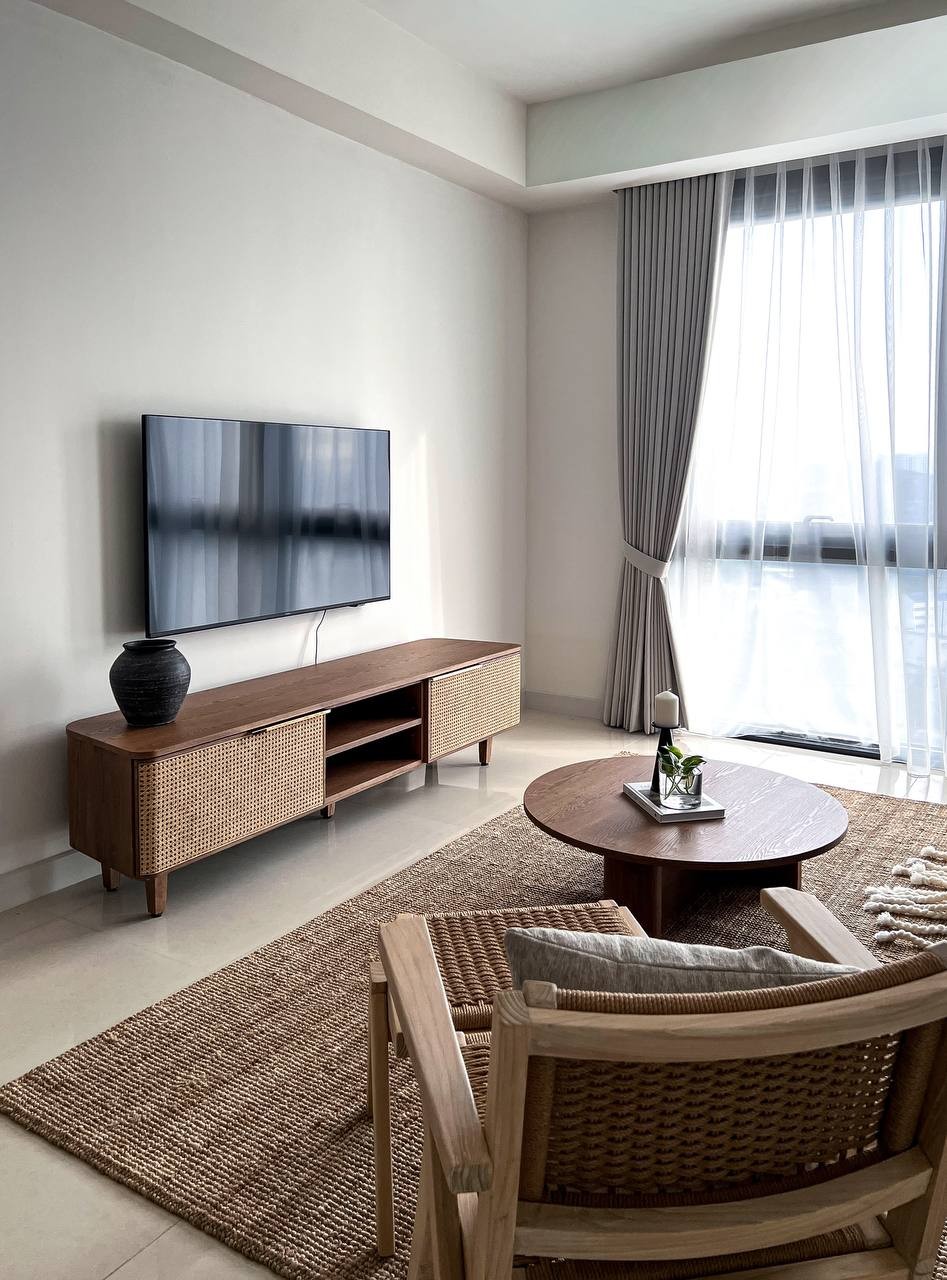
For a cabinet meant to last in a tropical home, construction details matter as much as the species of wood. How the panels are sealed, how the edges are banded, and how the joints are made will decide whether the piece stays flat and clean through years of humid seasons.
What Modern TV Cabinet Options Does Nicchris Offer?
Nicchris designs contemporary TV cabinets for Malaysian homes, with low-profile proportions, sealed finishes and cable-aware construction built in. The range leans into the sizing and climate principles above: units run wider than common screen sizes, sit at heights that keep the picture near seated eye level, and use stable cores with real-wood veneers or quality laminates suited to humid interiors.
Floating and floor-standing silhouettes are both available, so you can match the piece to your room rather than force the room to fit the furniture. Rear cut-outs, vented compartments and a mix of drawers and open shelving handle the practical side of cables and devices without a visible mess.
Because a media wall rarely stands alone, Nicchris pieces are designed to coordinate with the wider living range. If you are assembling a room from scratch, the cabinet, sofa and coffee table are easier to balance when they share a design language from the start.
Choosing Your Modern TV Cabinet
The quickest way to a cabinet you will not regret is to measure before you shop. Note your seating distance, your seated eye height, and the exact TV width, then take those three numbers with you. A unit that is wider than the screen, lands the picture near 42 inches, and comes fully sealed against humidity will serve you long after this year's trends have moved on. Measure your space tonight, and let those figures narrow the choice for you.