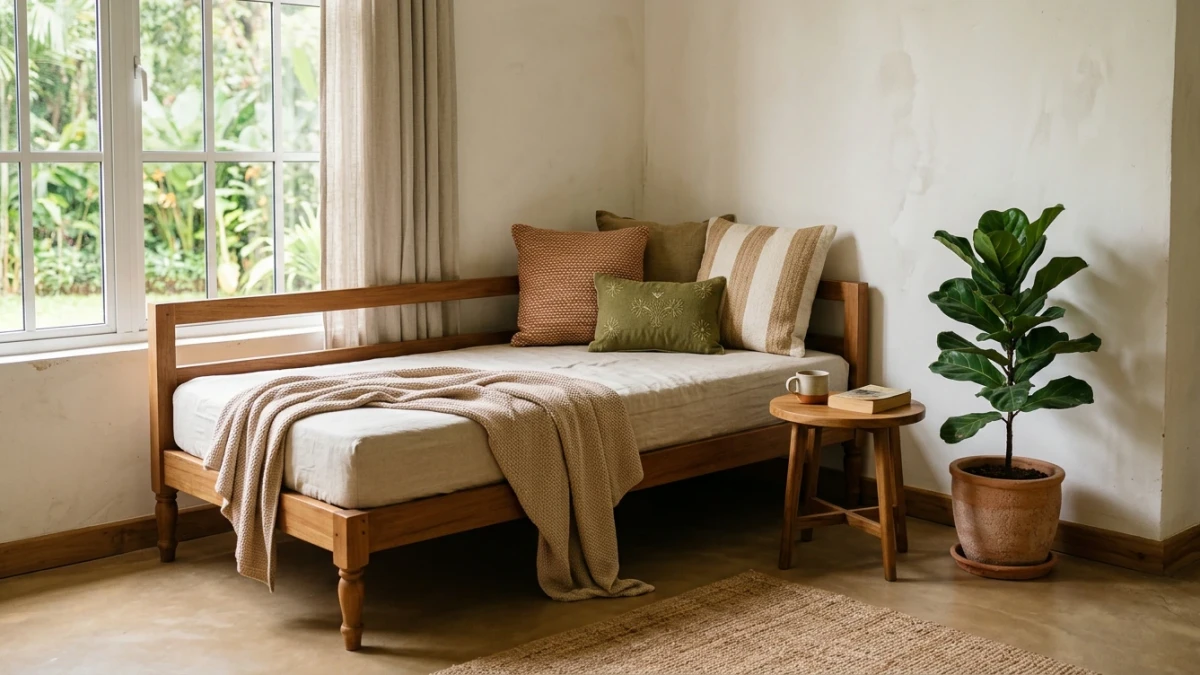
A daybed is a long, low frame that works as a sofa by day and an occasional single bed by night, built around a standard single mattress. If you want one piece that gives you a relaxed seating spot and a spare bed without taking up the room of both, a daybed is usually the right call. This guide walks through what a daybed actually is, how to size one, where to put it and which materials hold up in a Malaysian home.
What Is a Daybed and Why It Suits Modern Malaysian Homes
A daybed sits somewhere between a sofa and a bed. It has a mattress-depth platform, usually a backrest along one long side, and often one or two arms. You sit on it like a sofa, lie across it to read, and let a guest sleep on it overnight.
That flexibility is the point. In many Klang Valley homes, a dedicated guest room is a luxury of space few people have. A daybed in a study, landing or living room covers the occasional overnight guest without a permanent bed sitting empty most of the year.
It also changes how a room feels. A daybed invites lounging in a way an upright sofa does not. Placed by a window, it becomes the spot where someone actually reads a book or naps on a quiet afternoon.
Daybed vs Sofa vs Guest Bed: What Is the Difference?
The quickest way to decide is to picture how often you will sleep on it. A sofa prioritises upright seating and rarely makes a good bed. A guest bed sleeps well but wastes floor space when no one visits. A daybed splits the difference and does both jobs reasonably well.
A few practical distinctions:
- Seat depth. A daybed is deeper than a typical sofa, closer to mattress depth, so you can stretch out fully. That same depth can feel too deep for formal upright sitting, which is why cushions matter.
- Back support. A sofa wraps you with a tall back and arms. A daybed usually has a back along one side only, so it reads as lighter and more open in a room.
- Sleeping surface. A daybed uses a real single mattress, so it sleeps better than a fold-out sofa bed, though a dedicated bed still wins for nightly use.
If you need daily upright seating for a family, choose a sofa. If you host guests a few times a year and want a reading spot the rest of the time, a daybed earns its keep. The upholstery choices that apply to a sofa, fabric versus leather and firmer versus softer fills, apply to a daybed too.
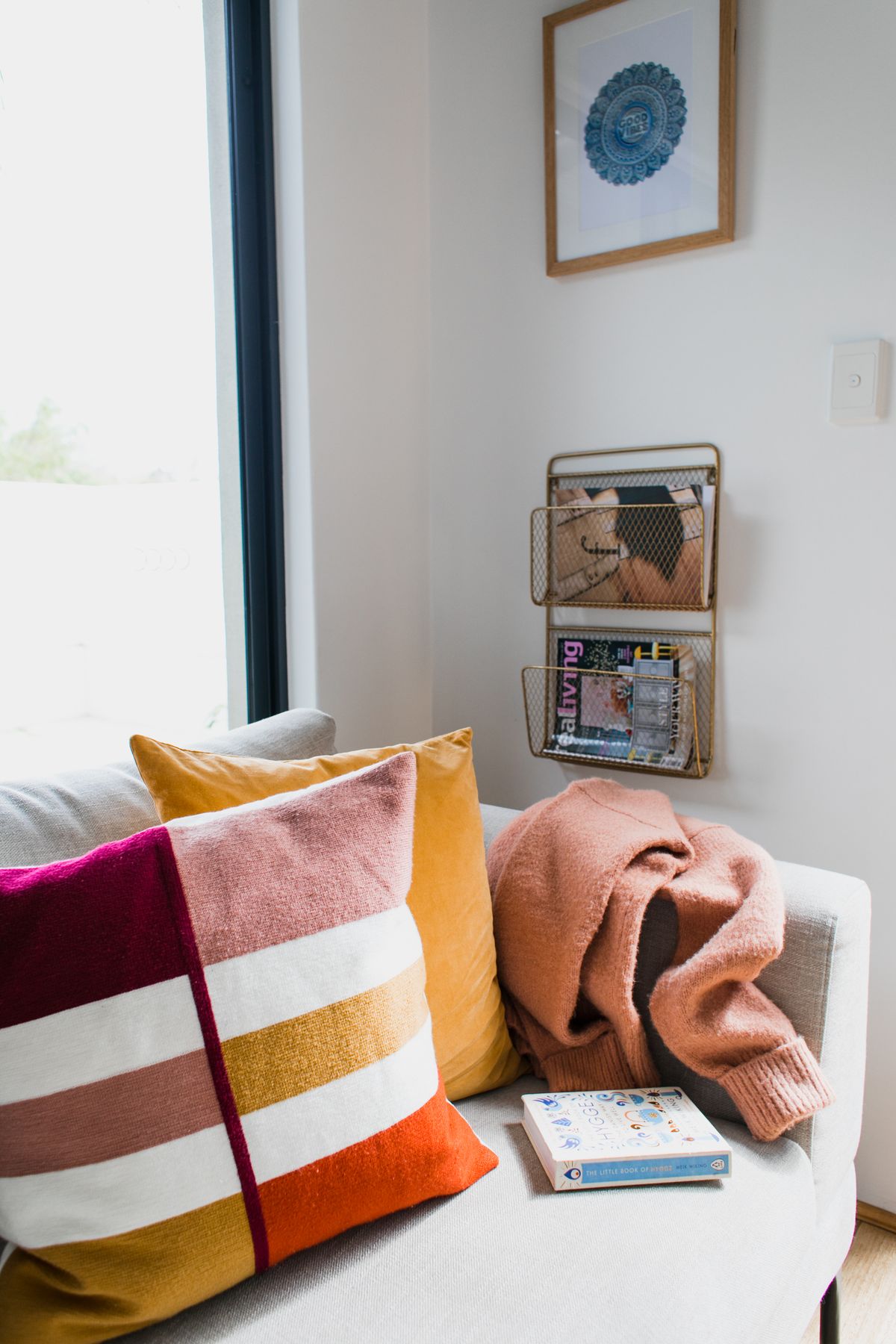
Why Choose a Daybed? Comfortable Seating and a Relaxing Spot
The strongest reason to buy a daybed is that it does two things with one footprint. You get a place to lounge and a place for a guest to sleep, which is efficient use of floor area in a compact home.
There is a comfort argument too. The deep platform lets you sit sideways with your legs up, lie back against bolsters, or sprawl fully. That posture range is hard to get from a standard sofa, and it is why a daybed often becomes the most-used seat in a house.
It also suits how many people now use their living space. A quiet corner for reading, scrolling or resting has real value, and a daybed carves that out without a dedicated room.
Choosing the Right Daybed Size: Dimensions and Proportions
Start with the mattress, because it fixes the frame size. A standard single mattress measures 38 by 75 inches, or 965 by 1905 mm, and a twin XL adds five inches of length at 80 inches for taller sleepers. Those numbers set the internal space your frame needs to hold.
Add the frame itself. A solid wood daybed adds roughly 5 to 15 cm per side depending on the design, so a single-mattress model typically occupies around 100 to 110 cm in width and 195 to 205 cm in length. Measure your intended spot in both directions before committing.
Proportion matters as much as raw size. A low, slim daybed keeps sightlines open in a small room, while a tall backrest and chunky arms can make a compact space feel crowded. In a larger living room, a more substantial frame holds its own against a big sofa.
Leave clearance to move around it. Aim for at least 60 to 75 cm of walking space on any side you need to pass. If the daybed doubles as guest sleeping, make sure one long side has enough room to get in and out comfortably.
Where to Place a Daybed: Living Rooms, Reading Corners and Guest Rooms
A daybed earns its place best where you want relaxed seating rather than formal arrangement. Against a window is the classic choice, since natural light makes the spot inviting for reading and resting.
In a living room, a daybed can work as the main sofa in a small home, or as a secondary lounging piece alongside a larger sofa in a bigger one. Pushed against a wall with the backrest showing, it reads cleanly and keeps the floor open.
A reading corner is where a daybed shines. Pair it with a slim side table and a floor lamp, and you have a dedicated nook. Keep the table low and small so it reads as part of the setup rather than a competing piece.
In a sunroom or balcony-adjacent space, a daybed suits the slow pace of the room. In a study or spare room, it turns an underused corner into both a work break spot and occasional guest bed.
Choosing Daybed Materials: Wood Frames, Fabric and Cushions
Material choice affects how long a daybed lasts and how it feels to use. The frame, the upholstery and the cushions each play a different role, and the right mix depends on your room and how heavily the piece will be used.
For the frame, solid hardwood holds up well in Malaysian conditions. Kuala Lumpur sits at an annual average humidity of around 80 percent, ranging from 77 to 84 percent across the year (timeanddate.com, Climate and Weather Averages in Kuala Lumpur, retrieved 2026-11-16). That constant moisture is hard on lightweight composite frames, which can loosen or warp over time, so a well-joined solid wood frame is a sensible investment. Wiping timber down and keeping it out of constant direct sun also helps it last.
Upholstery is where comfort and maintenance meet. Removable, washable covers are worth prioritising in a humid climate, since they can be aired out and cleaned. Breathable woven fabrics tend to feel better against the skin than tightly coated materials in warm rooms.
Cushions decide whether the daybed is a place you want to stay. A supportive base cushion with a firmer core keeps its shape, while softer scatter cushions and bolsters let you prop yourself up for reading. Skimping here is the most common reason a good-looking daybed goes unused.
Daybeds for Small Spaces: KL Condos and Apartments
A daybed is one of the strongest furniture choices for a compact home because it replaces two pieces with one. That matters more each year, as Klang Valley units get smaller. In Kuala Lumpur, the median condominium built-up area fell from about 1,141 sq ft in 2010 to 1,103 sq ft in 2020, and units in the 751 to 1,000 sq ft range became the most transacted size category (EdgeProp Malaysia, citing NAPIC transaction data, retrieved 2026-11-16).
In a condo of that size, every piece has to justify its footprint. A daybed does, because it gives a household seating and an occasional guest bed without a separate spare room.
Keep the design light for small rooms. An armless or single-arm daybed takes up less visual space and is easier to walk past in a tight layout. A frame that lifts the mattress off the floor, sometimes with drawers underneath, adds storage for bedding or seasonal items, which is valuable when cupboard space is tight.
How to Style a Daybed: Cushions, Throws and Side Tables
Styling a daybed is about layering for comfort without burying the seat. Start with two or three larger back cushions to create a soft wall along the backrest, then add a couple of smaller scatter cushions and a bolster for propping up.
A throw adds texture and gives the piece a lived-in feel, which suits a lounging spot. Drape it over one arm or fold it across a corner rather than covering the whole seat.
Anchor the daybed with a small side table within easy reach for a drink, a book or a phone. A floor lamp beside it finishes a reading nook. Keep the surrounding floor fairly clear so the daybed reads as a restful spot rather than a crowded one.
Modern Daybed Designs: Balancing Comfort and Contemporary Style
Contemporary daybeds tend to favour clean lines, lower profiles and visible wood. A slim frame with a single backrest and tapered legs feels current and keeps a room open, which pairs well with the pared-back look many Malaysian homes now lean toward.
Wood tone does a lot of the work. A warm oak or walnut frame brings quiet character, while a darker finish reads more formal. The upholstery colour then sets the mood, with neutral linens and greys being the easiest to live with over time.
If you like this restrained look, a wood-framed daybed fits naturally into a minimal, Japandi-leaning interior where timber and soft neutrals do most of the talking.
Daybeds at NICCHRIS: Design and Made-to-Order Craftsmanship
At NICCHRIS, we design and build furniture in-house at our Sungai Buloh workshop, which means a daybed can be made to suit your room rather than the other way around. That flexibility is the main advantage of a made-to-order piece.
A fixed-size daybed from a showroom either fits your corner or it does not. A custom one can be built to a specific length for a reading nook, a particular height to sit under a window sill, or a wood tone that matches your existing furniture. You also choose the upholstery, which lets you balance comfort, colour and ease of cleaning for your home.
We work with solid wood, natural wood veneer, upholstery and other materials, and we can talk through the trade-offs of each for your specific use. If you are weighing a bespoke approach generally, our guide to custom-made furniture, from design to craftsmanship explains how the process works.
The practical next step is to measure your intended spot in both directions, decide whether you need the daybed to sleep a guest, and bring those numbers to the conversation. From there, a design that fits your room and holds up in the local climate is a straightforward thing to plan. To see options in person, you are welcome to visit our Sungai Buloh showroom by appointment or explore the NICCHRIS collections online.