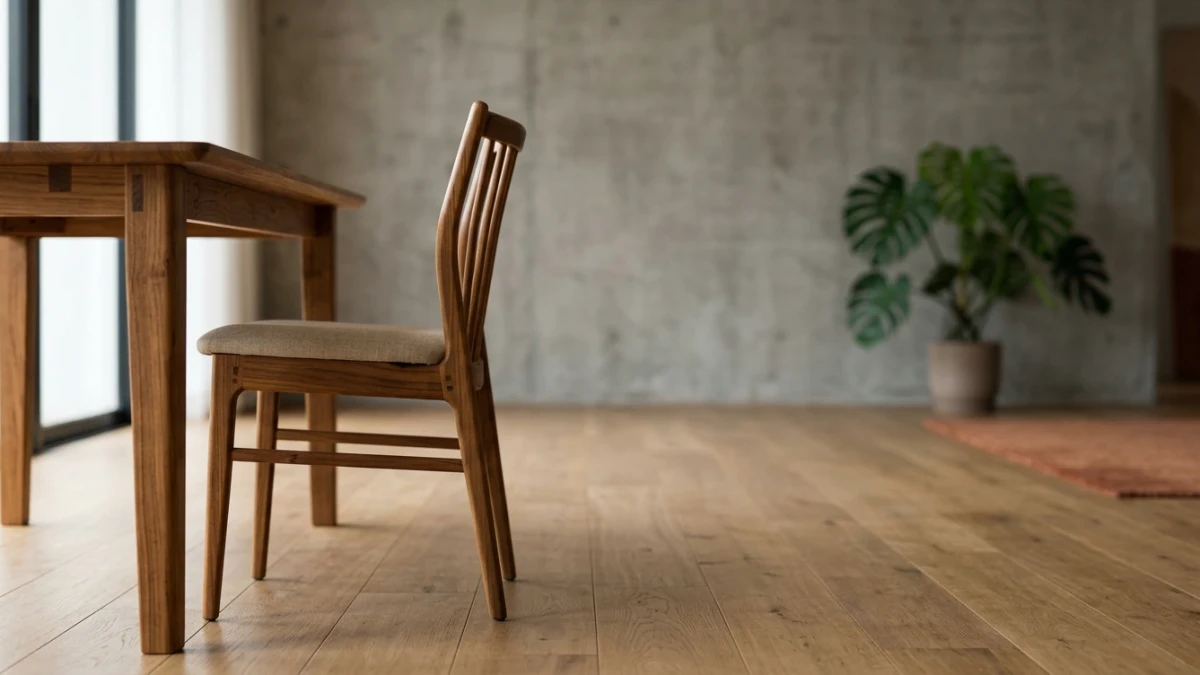
A good dining chair has to do two jobs at once: hold you comfortably through a long meal and survive years of being pulled, leaned on and wiped down. Solid wood seating does both well when the proportions are right and the timber is properly prepared for a humid climate like ours. This guide walks through what actually matters when you choose, from seat height and frame construction to matching chairs with your table and keeping them stable through a Selangor monsoon.
If you are furniture shopping across the Klang Valley, or comparing a furniture shop in Penang with a maker closer to home in Sungai Buloh, the same fundamentals apply. Knowing them helps you judge quality instead of guessing from a showroom photo.
Comfort and Support for Everyday Dining
Comfort in a dining chair comes down to a few measurements working together. The seat height is the one most people feel immediately. A seat set too high leaves your feet dangling; too low and you are reaching up to your plate. Around 18 inches, or 46 cm, from the floor suits most adults and most dining tables.
Seat depth matters almost as much. If the seat is too deep, shorter diners cannot rest their backs against the support without their legs sticking straight out. A depth in the region of 16 to 18 inches lets most people sit back properly. Width should give you room to shift without knocking elbows with the person beside you.
The backrest is where cheaper chairs often disappoint. A slight backward tilt and a shaped rest at the lower back make a real difference across a two-hour meal. A flat, vertical back looks tidy but pushes you to perch on the front edge.
One detail people overlook: everyday dining chairs get used far more than special-occasion seating. If your family eats at the table daily, prioritise a chair that stays comfortable for ordinary meals rather than one that only looks good for guests.
Solid Wood Frames vs Upholstered Seats
This is the decision most buyers wrestle with, and it is worth setting aside the idea that one option is automatically superior.
A solid wood seat, usually shaped or saddled to follow the body, is hard-wearing and simple to live with. You wipe it clean, it does not stain, and it ages gracefully as the timber develops a patina. Teak, oak and walnut all work well here, each with its own tone and grain. The trade-off is firmness. A sculpted wooden seat can be genuinely comfortable, but it will never feel like a cushion.
An upholstered seat adds padding and a softer landing, which earns its place at a table where meals run long or where older family members sit often. The frame underneath can still be solid wood, so you are not choosing between durability and comfort. The compromise is maintenance: fabric picks up spills and needs cleaning, and in our humidity it benefits from a quick-dry foam and a removable, washable cover.
A common middle path is a solid wood frame with a slim upholstered pad, or a woven seat such as rattan or cord. You get the structure and longevity of timber with a bit more give underfoot. The right balance depends on how long your meals run and who sits at the table.
Matching Chairs to Your Dining Table
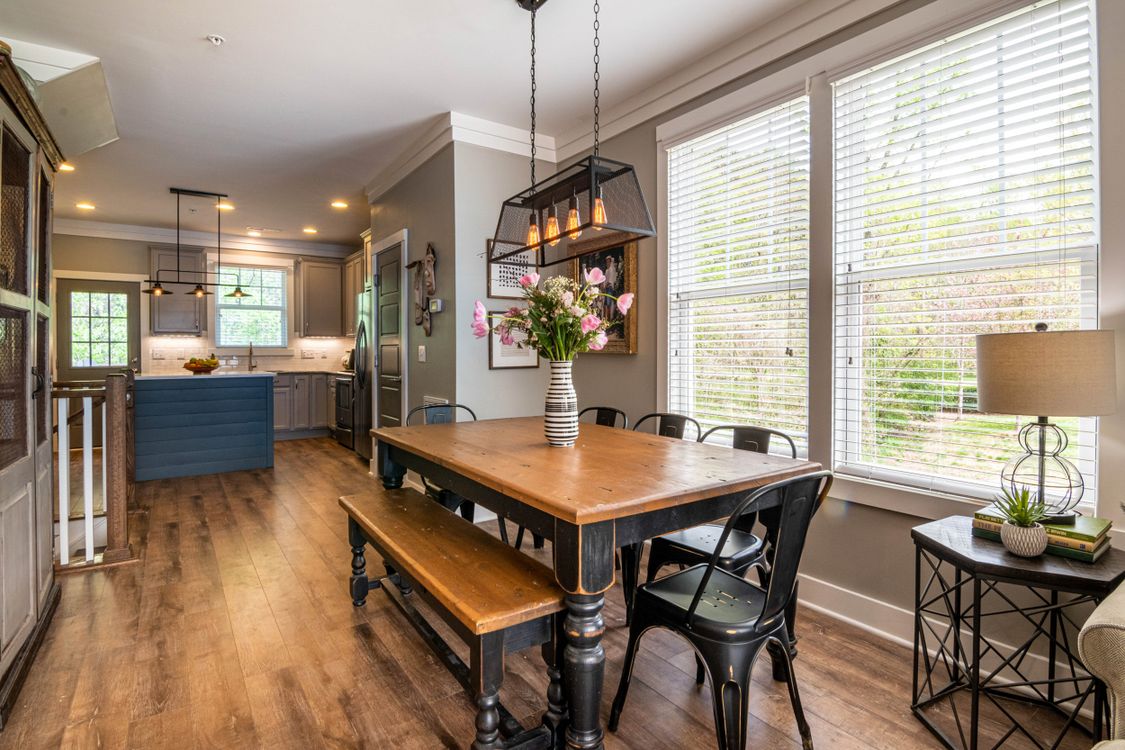
The relationship between chair and table is mostly about clearance. Measure from the floor to the underside of the tabletop or apron, then subtract your seat height. You want the result to land somewhere around 9 to 12 inches. That gap gives your thighs room and lets you cross your legs without jamming against the frame. A standard table sits 28 to 30 inches high, which is why an 18 inch seat pairs with it so reliably.
Table length tells you how many chairs you need. A useful rule is to allow roughly 60 cm of table edge per diner. A 1.8 metre table seats six without crowding; stretch to 2.4 metres and you can host eight. Leave the corners clear, since a chair pushed into a corner leaves the diner with nowhere to put their knees.
On tone, chairs do not have to match the table exactly. Buying a boxed set is the safe route, but a deliberate contrast often reads as more considered. A pale oak table with darker walnut chairs, or wooden chairs around a marble-topped table, can look intentional rather than mismatched. The thing to avoid is a near-match that looks like a failed match. Either commit to the same wood or make the contrast clear.
Durability Tips for Malaysia's Climate
Wood furniture and Malaysian humidity have a long, complicated relationship. Selangor sits at roughly 86 percent average relative humidity, peaking around November, according to long-term climate data for the state. Wood is hygroscopic, meaning it absorbs and releases moisture from the air, swelling in the wet season and shrinking when a room is air-conditioned for long stretches. That constant movement is what loosens joints and opens up cracks.
The ideal indoor range for wood furniture is around 35 to 55 percent relative humidity, and stability within that band matters more than hitting an exact figure, as furniture care guidance notes. Few Malaysian homes sit naturally in that range, so the practical goal is to reduce the swings rather than chase a perfect number.
A few habits go a long way:
- Choose chairs made from properly kiln-dried timber. Wood dried to a stable moisture content before construction moves far less in service.
- Keep chairs out of direct sun and away from the blast of an air-conditioner vent, both of which dry one side faster than the other.
- Run air conditioning or a dehumidifier during the dampest stretches. You are not trying to freeze the room, just to flatten the humidity spikes.
- Look for strong joinery. Mortise-and-tenon or dowelled joints handle seasonal movement better than ones held together with staples or weak glue alone.
None of this makes solid wood a bad choice for Malaysian homes. It simply means the way a chair is built and cared for matters more here than in a temperate climate.
Made-to-Order Dining Chairs at Nicchris
Standard chairs are built to standard tables, which is fine until your table is not standard. If you have an unusually tall dining table, a bench on one side, or family members who find typical seats too deep, off-the-shelf seating forces a compromise.
At Nicchris, we design and build our furniture in-house in Sungai Buloh, which means dining chairs can be adjusted to suit your table and the people using it. Seat height, depth and width can be set to the dimensions that actually work for your dining area. You can choose the timber, whether you want a sculpted solid wood seat or an upholstered pad, and specify a finish that sits well with your existing pieces. For non-standard orders, that flexibility matters more than any catalogue photo.
Because we work with solid wood day to day, we prepare and build with Malaysia's climate in mind from the start rather than treating humidity as an afterthought. If you want to understand how a bespoke piece comes together, our article on custom-made furniture and craftsmanship walks through the process.
The most useful next step is to measure your table height and the length of each side before you shop. Those two numbers tell you the seat height to look for and how many chairs will fit, which turns a vague showroom decision into a clear one. If you would like to see and sit in solid wood dining chairs before committing, you are welcome to explore our collections or visit the Nicchris showroom in Sungai Buloh by appointment.