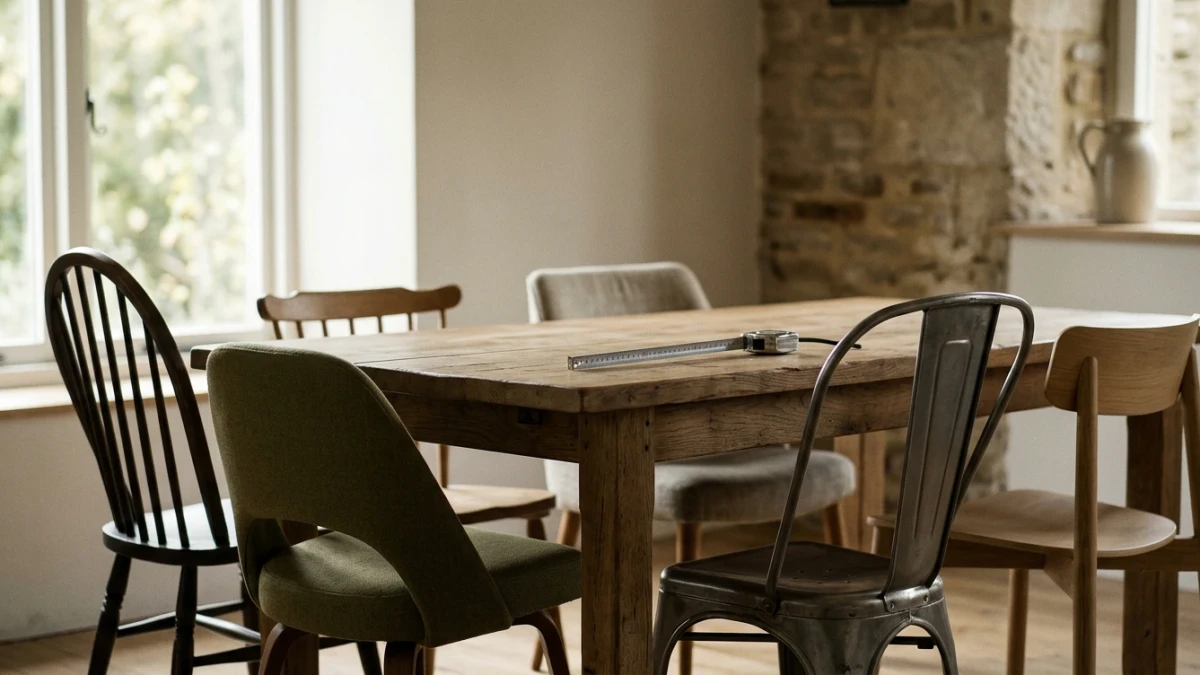
The right dining chairs sit about 18 inches off the floor, leave 10 to 12 inches of clearance under the table, and match the way your room already looks and lives. Get those three things right and almost everything else is personal taste.
This guide walks through how to choose dining chairs that feel good for a long meal and look right in your home. We cover matching chairs to your table, comparing upholstered, wooden, and moulded seats, the comfort details that matter most, how to mix styles without it looking random, and how to keep everything clean through daily family use.
Matching dining chairs to your table height and style
Start with the numbers, because comfort at the table is mostly a question of fit. A standard dining chair seat sits about 18 inches (46 cm) off the floor, with most chairs landing in the 17 to 20 inch range, according to SizeMarker's dimensions reference. That height is designed to pair with a typical dining table around 28 to 30 inches tall.
The measurement that actually decides whether a meal feels comfortable is the gap between the seat and the table. Allow 10 to 12 inches of clearance between the seat top and the underside of the tabletop, with 12 inches as the recommended minimum. Too little and your thighs press against the apron. Too much and you hunch to reach your plate.
Once the height works, think about style. A chunky farmhouse table wants chairs with some visual weight, while a slim modern table in glass or light oak looks best with lean, low-profile seating. In a compact city flat, keeping the dining set proportionate to a smaller footprint matters as much as the look. Modern dining chairs tend to use thinner frames and cleaner lines, which helps a small room feel open.
Upholstered vs wooden vs moulded seat options
The seat material sets the tone for both comfort and upkeep. Each of the three common options earns its place in a different kind of home, so it helps to know what you are trading.
Upholstered seats
Upholstered chairs are the most comfortable for long dinners. A padded seat and a supportive back make a two-hour meal easy, which is why they suit people who host often or linger over food. The trade-off is maintenance. Fabric absorbs spills and shows wear, so families should weigh the cleaning side carefully, which we cover further down.
Wooden seats
A solid wooden seat is the workhorse. It shrugs off spills, wipes clean in seconds, and can last for decades with basic care. Bare wood is firmer than foam, so a contoured or saddle-shaped seat matters a lot here for comfort. Wood also ages well, developing character rather than looking tired. If you like the warmth of timber throughout a room, balance the wood tones so the dining set does not fight the rest of the space.
Moulded seats
Moulded chairs, usually in polypropylene or a plywood shell, are the practical modern choice. They are light, easy to move, simple to wipe down, and often stackable. The curved shell flexes slightly and spreads your weight, which makes a hard surface more comfortable than it looks. For small rooms and busy households, moulded modern dining chairs hit a strong balance of price, durability, and easy cleaning.
Comfort factors: back support, seat depth and armrests
Comfort comes down to three things your body notices within the first few minutes: how your back is supported, how deep the seat is, and whether your arms have anywhere to go.
Back support is the one people underrate. A back that curves gently to follow the spine, or one with a slight recline, lets you sit upright without strain. A dead-straight vertical back looks tidy but pushes you forward over time.
Seat depth is the next detail. A standard seat runs 15 to 18 inches deep, which supports your thighs while leaving a small gap behind the knees. Too shallow and you perch on the edge. Too deep and either your back loses contact with the backrest or the seat front digs into your calves.
Armrests are a genuine choice rather than an upgrade. They add comfort and a sense of occasion, which makes them lovely for the heads of the table. The catch is clearance: armrest chairs need to slide under the apron of your table, so measure the gap before you buy. Many people compromise by using two armchairs at the ends and armless chairs along the sides.
Mixing and matching chairs for a curated look
A matched set is safe, but mixing chairs often looks more considered, closer to how a designer or a well-travelled home comes together over time. The trick is to hold one element constant so the variety reads as a deliberate choice.
Pick an anchor and stick to it. Common anchors include:
- Consistent seat height, so everyone sits at the same level even if the chairs differ.
- A shared colour, such as several timber tones all in warm oak, or a single accent colour across mixed shapes.
- One material thread, like metal legs running through chairs that otherwise look different.
A reliable formula is to pair a set of matching side chairs with two contrasting end chairs, perhaps upholstered armchairs or a bench on one side. The contrast gives the table a focal point without tipping into chaos. For broader principles on combining pieces so a room feels collected rather than cluttered, see our notes on furniture and home decor styling.
If you are building a mixed look over several purchases, bring a photo and your table measurements each time, and check new chairs against the anchor you chose at the start. That one habit keeps a growing collection coherent.
Durability and cleaning tips for daily family use
For a table that sees daily family meals, durability and easy cleaning should carry as much weight as looks. The good news is that a few checks at the buying stage save years of frustration later.
For upholstered chairs, the fabric's abrasion resistance is the number that predicts how it will wear. Upholstery is rated by how many cycles it survives in a standardised rub test, and heavier-duty fabrics last far longer under daily use than light decorative ones. For a family table, lean toward performance or contract-grade fabrics, and favour removable, washable covers or stain-resistant finishes. A spill on the right fabric is a quick wipe rather than a permanent mark.
For wooden and moulded seats, cleaning is simpler: a damp cloth handles most of daily life. With wood, check that the finish is sealed, since an oiled surface needs occasional re-oiling while a lacquered one is more forgiving of sticky fingers. For moulded shells, a quick wipe and the odd check on the leg joints is usually all it takes.
Across every material, it is the joinery that decides lifespan. Chairs loosen where parts meet, so look for solid joints, corner blocks under the seat, and a frame that does not wobble when you rock it gently. Build quality is exactly what separates a designer piece from a disposable one, and it is the reason a well-made chair stays steady after years of being dragged across a floor. Our look at the craft behind Nicchris explains why that construction detail matters more than any single feature on a spec sheet.
Before you commit to a set, sit in the chair at a table of the right height, check the clearance under the apron, and run your hand over the joints. If it feels steady and comfortable for a few minutes in the showroom, it will serve you well through countless dinners at home.