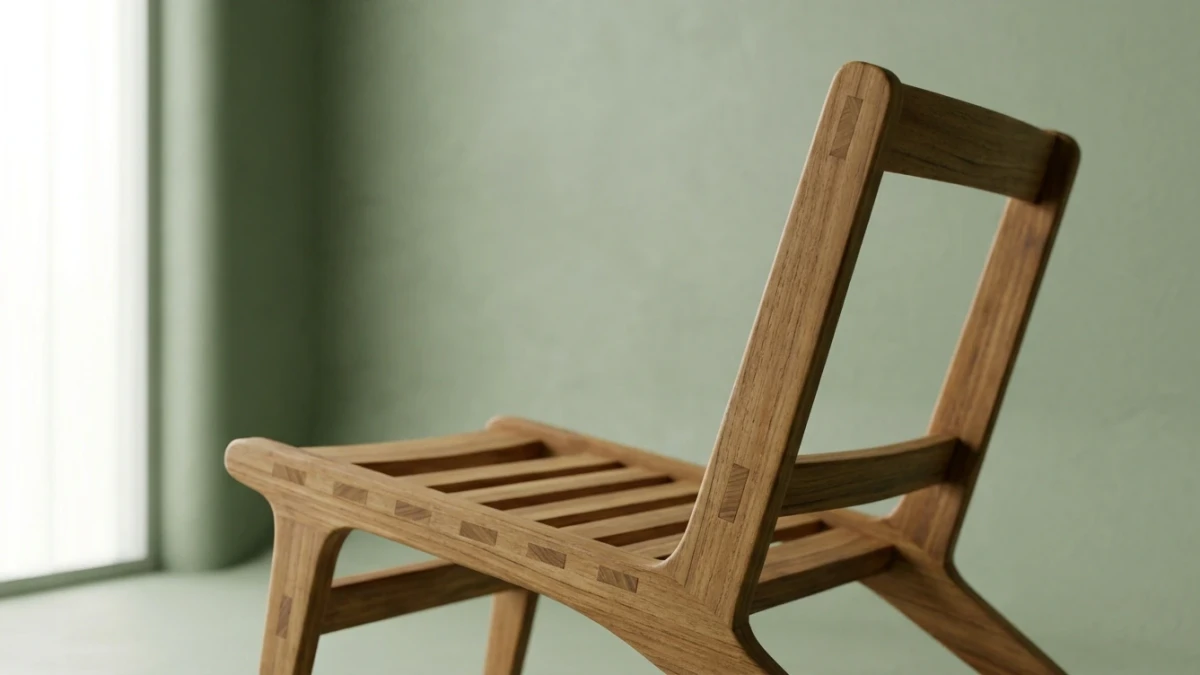
A lounge chair earns its place by holding your body at the right angles for long stretches, and a wood frame is what makes that geometry hold its shape year after year. The comfort you feel comes from seat height, seat depth and backrest angle working together, while the wood frame carries the load and sets the visual tone of the chair.
This guide walks through how a well-made wood lounge chair is put together, how solid wood frames are shaped for the body, how to pair upholstery with wood tones, where to place the chair at home, and what you can change when you order one custom for a Klang Valley apartment or landed home.
Anatomy of a well-made lounge chair
A lounge chair breaks down into a frame, a seat platform, a backrest and the upholstery that covers them. The frame is the skeleton: legs, side rails and the structural members that the backrest and arms attach to. On a wood lounge chair, much of this frame is visible, so the joinery has to be both strong and clean to look at.
The parts that decide comfort are measurable. Seat height controls whether your feet rest flat and your thighs stay level. Seat depth decides how far back you can sit before the seat edge meets the back of your knees. The backrest angle sets how upright or reclined you sit. Get these three right and the chair feels effortless; get one wrong and no amount of padding fixes it.
As a practical starting point, most adults sit comfortably with a seat height around 38 to 48 cm and a seat depth of roughly 48 to 56 cm. Leaving about 2 to 3 cm of clearance between the front edge of the seat and the back of the knees stops the seat from digging in. A lounge chair usually reclines more than a dining chair, which is why it invites you to stay seated longer.
Joinery is where craft shows. Mortise and tenon joints, dowels and corner blocks all transfer load through the frame and resist the twisting that happens every time someone drops into the seat. A chair that creaks after a year usually has weak joints rather than weak wood. If you want to understand how design intent turns into a built piece, our overview of custom-made furniture from design to craftsmanship covers that process in more detail.
Solid wood frames and ergonomic shaping
Solid wood frames let a maker shape the chair to the body, because the material can be cut, curved and sanded into forms that follow the spine and support the arms. A slightly reclined back, a seat that tilts a touch toward the rear and arms set at resting height all come from shaping the wood rather than relying only on cushions. This is why a well-designed wood lounge chair can feel supportive even with thin upholstery.
Different species behave differently under this kind of work. Teak is prized for its natural oils and dimensional stability, which is why it has a long history in both indoor and outdoor seating. Oak is denser and harder, giving crisp edges and a pronounced grain. Walnut sits in a similar hardness range to teak but reads darker and richer in colour. Hardness is only part of the story: a wood's stability, grain and how it takes a finish all matter for a chair frame. The standard way makers compare the surface hardness of these species is the Janka hardness test, which measures the force needed to press a steel ball into the wood.
Shaping also depends on grain direction. A curved backrest cut so the grain runs along the curve stays far stronger than one cut across it, which is why skilled makers plan each component around the timber before cutting. The visible result is a frame that looks fluid and feels solid at the same time.
Fabric and leather pairings for wood tones
Upholstery changes both the feel and the look of a wood lounge chair, and the choice usually comes down to how the room is used. Fabric is softer to the touch, breathes well in warm weather and comes in a wide range of textures and colours. Leather is firmer at first, develops a patina over years of use and wipes clean easily, which suits homes with children or pets.
Matching upholstery to the wood tone is where a chair starts to feel considered. A few pairings that tend to work:
- Light oak or ash frames sit well with pale, cool fabrics like oatmeal, grey or soft blue, giving a calm Scandinavian feel.
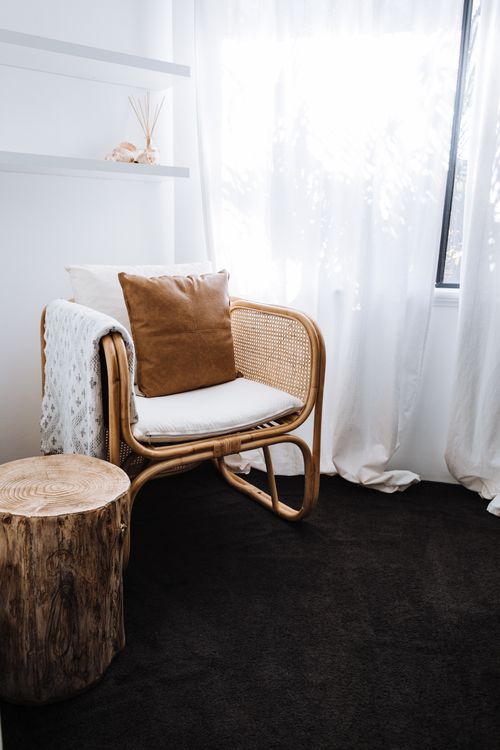
- Teak and medium brown tones pair naturally with warm neutrals, mustard, olive or tan leather.
- Dark walnut frames carry deeper colours confidently, including charcoal fabric or cognac and dark brown leather.
Texture matters as much as colour. A smooth leather against a heavily grained frame creates contrast, while a nubby boucle softens a crisp, angular frame. The same trade-offs between leather and fabric that apply to a sofa apply here too, scaled down to a single seat. For an accent piece, the upholstery is also your chance to introduce a colour the rest of the room does not already have.
Fabric performance counts in Malaysian homes. Humidity here stays high through much of the year, so breathable, quick-drying weaves tend to feel better against the skin than dense, non-porous covers in a room without constant air conditioning.
Placing a lounge chair for reading or relaxing
Where you put a lounge chair, and which version you choose, should follow what you plan to do in it. A reading chair and a relaxing chair are shaped differently, so deciding the job first saves you from a chair that looks right but sits wrong.
For reading, you want to stay fairly upright so your neck stays neutral and a book or tablet sits at a comfortable angle. A shallower seat, around 48 to 50 cm deep, lets you sit back fully with lumbar support rather than slouching. Place it near natural light, ideally beside a window, with a small side table within arm's reach for a drink, a lamp and whatever you are reading.
For relaxing, a deeper seat of roughly 52 to 56 cm and a more reclined back let you sink in and unwind. This kind of chair works well angled toward a view, a television or the main seating group, inviting longer sessions rather than quick sits.

Give the chair breathing room. Around 60 to 75 cm of clearance in front keeps a walkway comfortable, and angling a lounge chair rather than squaring it to the wall often makes a room feel more inviting. In tighter condo living rooms, a single well-placed lounge chair can anchor a corner without the bulk of adding another sofa, doing real work in a small floor plan.
Custom lounge options for Klang Valley homes
Made-to-order lounge chairs solve the mismatch between standard furniture sizes and the real dimensions of local homes. Condo living rooms in the Klang Valley are often compact, ceilings vary, and the colours of existing flooring and built-ins rarely match an off-the-shelf chair exactly. Custom work lets the chair fit the room instead of forcing the room around the chair.
The elements worth customising on a wood lounge chair usually include:
- Dimensions: seat height, seat depth and overall footprint adjusted to your body and your space.
- Wood tone and species: matched to existing flooring, cabinetry or a dining set so the pieces read as a family.
- Upholstery: fabric or leather, colour and texture chosen for how the chair will actually be used.
- Arm and leg profile: slimmer arms or tapered legs to lighten the look in a smaller room.
Climate is a practical reason to order locally made. A frame built and finished in the same humid conditions where it will live tends to behave more predictably than a piece shipped from a drier region, and once it arrives, ongoing care for wood furniture in Malaysia's climate keeps that frame stable for the long run. As a Sungai Buloh workshop, Nicchris designs and builds in-house, which keeps the conversation between you and the people cutting the wood short and direct.
If a lounge chair is on your list, start by deciding its main job, reading or relaxing, then measure the spot where it will sit and note the wood tones already in the room. Bring those three details to a showroom visit or an enquiry and you will get a chair sized, shaped and finished for the way you actually live. You are welcome to explore the Nicchris collections or arrange a visit to our Sungai Buloh showroom by appointment to sit in a few frames before deciding.