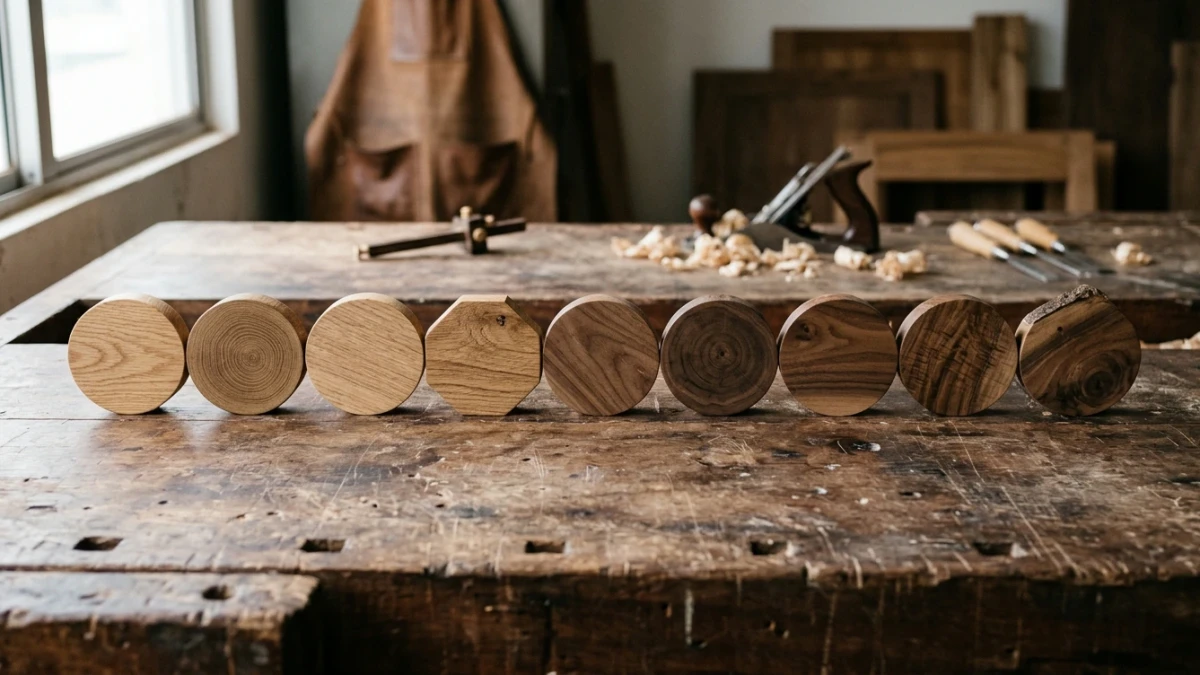
Start with the undertone and the room's light, then let the species follow. Wood tone, more than the species name, decides whether a dining table feels warm and inviting or cool and architectural. If you are weighing oak vs walnut furniture, the honest answer is that they suit different rooms, different light and different tastes, so the right choice depends on what you want the space to feel like.
This guide walks through how light, medium and dark finishes behave, how warm and cool undertones change a room, and how to match, mix and pair wood tones with everything from flooring to marble. The aim is to help you make a confident, lasting decision rather than chase whatever finish happens to be trending.
Understanding Wood Tones: Light, Medium and Dark Finishes
Wood tone describes how light or dark a finished surface reads, and it falls roughly into three bands: light, medium and dark. Light tones include pale oak, ash and birch. Medium tones cover teak, cherry and natural oak. Dark tones run from deep walnut to espresso-stained hardwoods.
Each band does something different to a room. Light finishes bounce daylight around and make a space feel airy, which helps in compact homes. Medium tones are the easiest to live with because they hide marks, dust and minor wear better than very pale or very dark surfaces. Dark finishes add weight and a sense of calm, but they show dust and fingerprints more readily and need enough light to avoid feeling closed in.
The finish itself also shifts the tone. A matte oil finish keeps wood looking soft and natural, while a glossier lacquer deepens the colour and adds sheen. The same oak board can look quite different depending on how it is finished.
Warm vs Cool Wood Tones: How Undertones Change the Feel
Undertone is the quiet colour sitting beneath the surface, and it matters more than most people expect. Warm woods carry yellow, orange, red or golden undertones. Teak, cherry and many oaks sit here. Cool woods lean towards grey, ashy or slightly taupe undertones, which is why grey-washed oak and some ash finishes feel more neutral and modern.
Why does this matter? Because undertones either agree or clash with the rest of your room. Warm wood tones pair naturally with earthy paint colours, rattan and brass. Cool tones sit comfortably with grey walls, cooler marbles and black metal frames.
A common mistake is buying beautiful pieces that fight each other because one is warm and one is cool. When you build a palette, decide early whether the room leans warm or cool, then keep your wood tones broadly on the same side. You can still mix tones, but shared undertones are what make the result feel deliberate.
Oak vs Walnut Furniture, Ash and Teak: Colours and Grain Patterns
Oak, ash, teak and walnut each have a distinct colour and grain personality, and knowing them helps you shortlist faster. These four cover most of what you will see in quality wood furniture.
Oak is pale to golden with a bold, open grain that is easy to read across a tabletop. Ash is similar in lightness but often a touch cooler and cleaner in pattern, which suits Scandinavian-leaning interiors. Teak is a warm golden brown with natural oils that make it well suited to Malaysia's humidity. Walnut is the dark one, a rich chocolate brown, usually with a smoother, more flowing grain and pale streaks where the sapwood runs.
On the oak vs walnut furniture question specifically, the difference goes beyond colour. According to the USDA Forest Products Laboratory Wood Handbook, white oak measures around 1,360 pounds-force on the Janka hardness scale while black walnut sits near 1,010 (USDA Forest Service, Wood Handbook: Wood as an Engineering Material, retrieved 2026-11-26). Oak is the harder, more dent-resistant surface, which makes it forgiving in busy family dining areas. Both species still fall well within the range used for fine furniture, so walnut's lower hardness simply reflects a different balance of colour, grain and feel.
For a closer look at a single warm species, our guide on teak furniture in Malaysia explains why its oils help it last in our climate.
Matching Wood Tones with Your Flooring
The goal with flooring is clear separation, not a perfect match. When furniture wood sits too close in tone to the floor, the pieces blur into the ground and the room loses depth. A table that disappears into the parquet rarely looks intentional.
The simplest rule is to pick a clear direction. Either contrast your furniture against the floor, say a walnut dining table over pale oak flooring, or keep them in the same family but separate them by at least a couple of shades. Cool floors take cool furniture tones comfortably, and the same holds for warm pairings.
A rug is your pressure valve. If a floor and a table are a little too similar, a rug in a contrasting tone or texture breaks them apart and ties the grouping together. For most Malaysian homes with tiled or light laminate floors, a medium or dark wood table reads beautifully because the contrast is already built in.
Mixing Different Wood Tones: Tables, Chairs, Cabinets and Coffee Tables
You can absolutely mix wood tones in one room, and doing so often looks more collected than a matching set. The trick is structure. Choose one dominant wood tone, usually the largest piece such as the dining table or a big cabinet, and let the other woods support it.
Then follow two habits. First, repeat each tone at least twice so nothing looks like a lone accident; if you bring in a lighter wood chair, echo that lightness somewhere else, perhaps a side table or a frame. Second, keep the undertones compatible, so warm mixes with warm and cool with cool, even when the depth of colour differs.
Chairs are the easiest place to introduce a second tone, since they are smaller and repeat around the table. If you are choosing seating, our notes on solid wood dining chairs cover how to balance comfort and construction alongside colour. A coffee table in a contrasting tone can also anchor a living room without forcing everything else to match it.
Choosing Wood Colours for Small Spaces: Apartments and Condominiums
In a small Klang Valley condominium, lighter wood tones generally keep the space feeling larger because they reflect more light. Pale oak, ash and light teak open up a compact living or dining area, especially when walls and larger pieces stay in the same bright family.
That does not rule out dark wood. Walnut and espresso tones bring a grounded, considered feel to a small room, but they ask for support: good lighting, some pale surfaces nearby and a bit of breathing space around each piece. Crowd a dark finish into a dim corner and the room tightens.
A practical middle path in local apartments is a light or medium frame with a darker top, or slim-profile furniture in a warm medium tone. Slim legs and raised bases let light travel underneath, which reads as more floor and more air. Scale matters as much as colour here, so measure your room and keep proportions honest before committing to a finish.
Pairing Wood with Other Materials: Marble, Stone, Fabric and Metal
Wood rarely stands alone, and the materials beside it can lift or flatten its tone. Marble and natural stone are natural partners: a warm walnut base under a pale, cool marble top gives a crisp contrast that suits modern dining and coffee tables. Keep an eye on undertones so the stone's veining and the wood's warmth do not pull in opposite directions.
Fabric softens wood. Upholstered chairs or a sofa in a tone that echoes or gently contrasts your timber make a room feel layered rather than hard. Metal adds a different accent: brass and bronze flatter warm woods, while black or chrome metal sharpens cooler tones and modern oak.
The principle across all of these is restraint. Let the wood tone lead, then choose one or two supporting materials rather than five. If you are drawn to stone, our piece on styling a home with marble shows how timber bases and marble tops work together.
Understanding Natural Wood Variations: Grain, Colour and Finish
Natural wood is not uniform, and that is the point. Within a single oak or walnut board you will see colour shifts, differing grain density and occasional mineral streaks or small knots. Across a custom table made from several boards, some variation in tone and figure is normal and expected.
This is where natural timber differs from printed laminates or engineered surfaces, which repeat a fixed pattern. A real wood top carries small differences that make each piece individual. Walnut in particular shows a lively mix of dark heartwood and paler sapwood, while oak's open grain reads strongly under raking light.
Finish and light then keep changing the wood over time. Many species gently shift tone as they settle, and sunlight accelerates it. Expecting this variation, rather than being surprised by it, is part of living comfortably with solid wood, and simple regular care keeps it looking its best for years.
Choosing Timeless Wood Tones: Trends Versus Long-Term Appeal
The wood tones that last are the ones you still like once the trend that inspired them has moved on. Very pale blonde woods and heavy grey-washed finishes have had strong runs, but fashions in finish move faster than good furniture wears out.
A table or cabinet built well can serve for decades, so it pays to choose a tone you respond to for its own sake rather than because it is current. Natural oak, teak and walnut have stayed in use for generations precisely because their colours are honest and adaptable. They suit changing wall colours, new rugs and evolving tastes.
If you love a trend-driven finish, use it on smaller or easily replaced items and keep your anchor pieces in tones you trust long term. That way the room stays current without forcing an expensive change every few years.
Exploring Wood Finishes at NICCHRIS: Materials, Colours and Craftsmanship
At NICCHRIS we design and make furniture in-house in Sungai Buloh, Selangor, working with solid wood, natural wood veneer, marble, stone and upholstery. Because pieces are made to order, wood tone is one of the choices you can shape rather than settle for, within the materials and finishes we offer.
That matters for everything in this guide. If a room leans warm, we can steer the timber and finish accordingly. If you want a walnut dining table over pale flooring, or a lighter oak profile to keep a condominium feeling open, those decisions happen at the design stage with people who build the furniture. Veneer, used well, also lets us achieve certain tones and grain layouts cleanly on larger surfaces, so it sits alongside solid wood as a considered option rather than a lesser one.
The practical next step is to see and feel the tones in person. Wood colour reads differently under showroom light than on a screen, so bring a photo of your room, note your flooring and wall colours, and compare samples against them. You are welcome to explore our collections online or visit the Sungai Buloh showroom by appointment to match a wood tone to your space with the people who will make the piece.