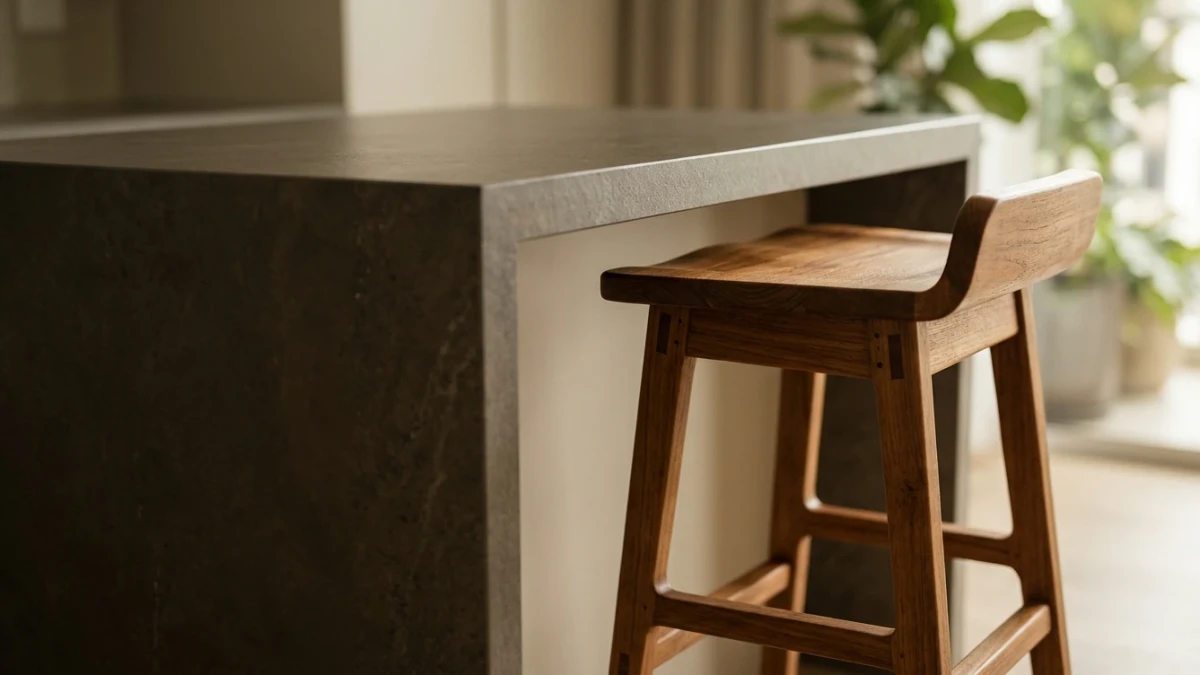
The right wooden bar stool comes down to two numbers: the height of your counter and the height of the seat. Get those to match and everything else, from comfort to looks, becomes much easier to solve. Wooden bar stools bring warmth and durability to a kitchen counter or island, and because seating gets used every single day, the details of height, back support and finish matter more than they first appear.
This guide walks through how to measure your counter and island, which solid wood styles and finishes hold up well, when to choose backless over backed seating, and how to match stools to the wood tones already in your kitchen. If you are planning a kitchen in the Klang Valley, there is also a section on custom bar stools built to your exact dimensions.
How do you measure counter and island heights for bar stools?
Measure the vertical distance from the floor to the top of your counter or island, then subtract the legroom you want underneath. Most kitchen counters sit around 90cm high, and the matching stool has a seat roughly 60 to 65cm off the floor. A taller bar-height island, closer to 105cm, needs a stool with a seat around 75 to 80cm.
The gap between the seat top and the underside of the counter is what makes a stool usable. Aim for 23 to 30cm of clearance so your thighs slide under without pressing against the lip. Too little space and you perch awkwardly; too much and your shoulders ride up near the countertop.
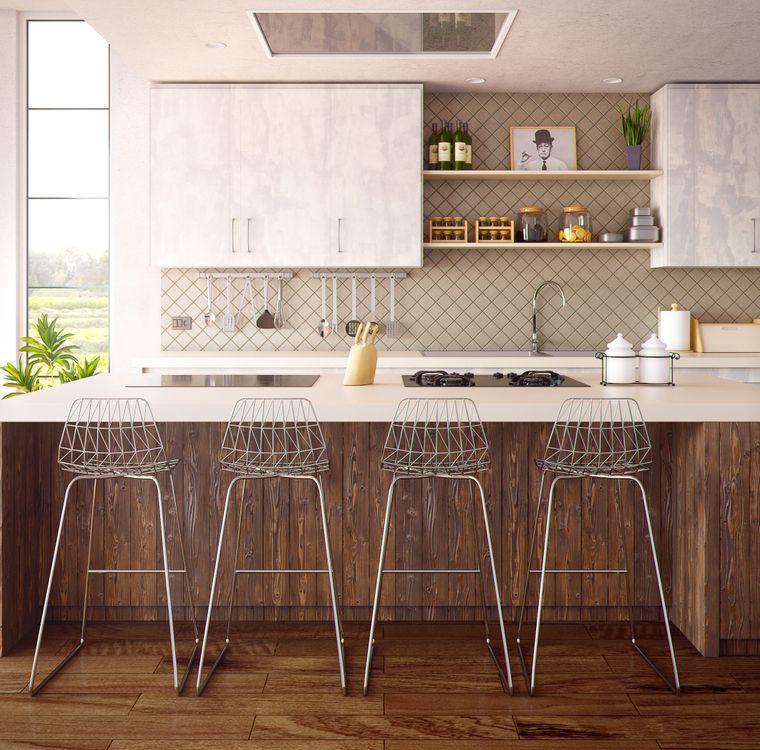
Spacing between stools matters just as much as height. A useful planning figure from kitchen design practice is to allow around 60cm of counter width for each stool. That gives each person room for their elbows and space to climb on and off without knocking the next seat. A 180cm island comfortably takes three stools, while a 120cm run suits two.
One practical note for Malaysian homes: condominium and apartment kitchens in and around Kuala Lumpur often have shorter counter runs than landed homes. If you only have 100cm of usable edge, two stools will feel far better than three squeezed in. Measure the clear run, not the full island length, since corners and appliances eat into usable seating space.
What solid wood bar stool styles and finishes work best?
Solid wood bar stools suit kitchens because the material takes daily knocks well and can be sanded back and refinished years later. Common choices include oak for its pale, even grain, walnut for a darker chocolate tone, and teak for its natural oils that handle moisture. Each has a different look and a different price, so the style you pick often follows the wood as much as the shape.
Styles tend to fall into a few families. A simple four-leg stool reads clean and traditional. A sled or cantilever base looks more contemporary and slides in and out easily. A swivel seat adds convenience at a busy island, though it needs a sturdier build to stay stable.
Finish changes both appearance and upkeep. An oiled finish keeps the wood looking natural and is easy to touch up, but it needs re-oiling over time. A lacquered or polyurethane finish forms a harder protective layer that resists spills, which helps in a kitchen, though a deep scratch is harder to repair invisibly. Neither is simply better; the choice depends on how the stool is used and how much maintenance you want.
For wood pieces in Malaysia's humid climate, construction quality matters more than the species alone. Our guide on how to care for wood furniture in Malaysia's climate covers why stable joinery and sensible finishing keep timber seating from cracking or loosening over the years.
Backless or backed: which seating is more comfortable?
Backed stools are more comfortable for longer sitting because they support your lower back, while backless stools win on flexibility and tucking away. The right pick depends on how you actually use the counter, not just on which looks better in a showroom.
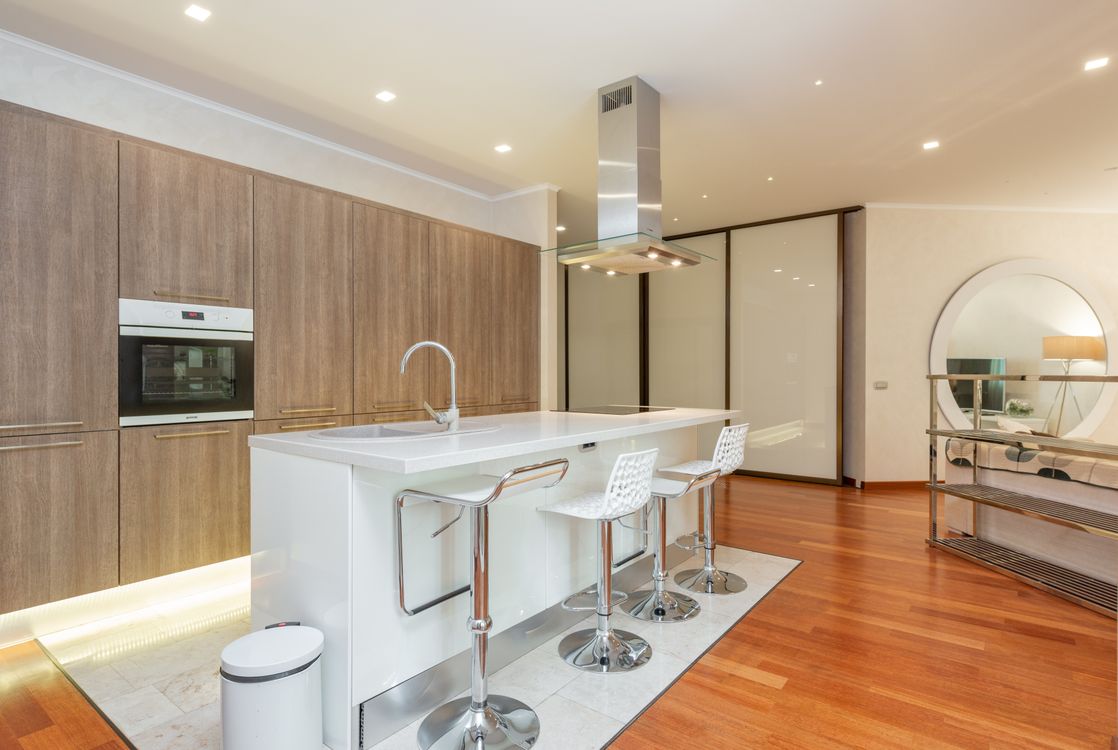
Choose backed stools if your island doubles as a dining spot, a homework desk or a work-from-home perch. The back rest makes a real difference once you sit past twenty minutes. A low back keeps the look light; a full back offers more support but reads bulkier and is harder to slide under the counter.
Backless stools suit smaller kitchens and quick, casual use. They disappear under the counter when not needed, which keeps a compact apartment kitchen feeling open. They also let you seat an extra person at a pinch, since nobody is boxed in by a back rest. The trade-off is less support, so they are better for short sits than long meals.
Seat shape adds another layer. A gently contoured or saddle-shaped wooden seat is noticeably kinder than a flat board, even without a back. If you like the clean look of backless but worry about comfort, a shaped seat with a small footrest is often the sweet spot.
How do you match bar stools to your kitchen wood tones?
Match wooden bar stools to your kitchen by deciding early whether you want them to blend in or stand out, then committing to that choice. The look that usually falls flat is the accidental near-miss, where a stool is close to the cabinet tone but not close enough, so it reads as a mismatch rather than a decision.
Blending works when you repeat the dominant wood tone in the kitchen. If your cabinets are warm oak, an oak-toned stool in a similar finish creates a calm, built-in feeling. This approach suits open-plan Malaysian layouts where the kitchen flows into the living area and you want the seating to recede visually.
Contrast works when the difference is clear and intentional. Dark walnut stools against pale oak cabinetry, or light timber seats against a dark kitchen, both look deliberate. The key is enough separation that the eye reads two distinct tones rather than one tone slightly off.
Also consider the other materials in the room. A stone or marble countertop, timber flooring and metal pendant lights all have their own undertones. Pulling the stool's wood tone toward the floor rather than the cabinets is a reliable trick, since it visually anchors the seating to the ground. If your kitchen leans on stone surfaces, our guide to styling a home with marble in Malaysia explains how wood and stone tones play off each other.
Why consider custom bar stools for Selangor kitchens?
Custom bar stools make sense when your counter height, kitchen size or wood tone does not match what you find off the shelf. Many kitchens, especially renovated condominium units and older landed homes around Sungai Buloh and the wider Klang Valley, have counters built to non-standard heights, which leaves mass-produced stools either too tall or too short.
A made-to-order approach lets you set the seat height precisely to your counter, so the clearance underneath is right the first time. You can also specify the wood species and finish to match existing cabinetry or flooring, choose backless or backed to suit how the counter is used, and size the footprint to fit a tight run without crowding.
At Nicchris, bar stools are designed and made in-house at our Sungai Buloh workshop, with selected options across dimensions, wood, finishes and upholstery. Because we build rather than only sell, the seat height and proportions can follow your kitchen rather than forcing your kitchen to follow a standard size. If you want to understand what goes into a made-to-order piece, our overview of custom-made furniture from design to craftsmanship walks through the process.
The practical takeaway is simple: measure your counter height and the clear run of usable edge, decide whether you sit for minutes or hours, and pick a seat height that leaves 23 to 30cm of legroom. Once those numbers are settled, choose a wood tone and finish that either matches or deliberately contrasts with your kitchen. If your counter sits at an unusual height or your kitchen tones are hard to match, a custom stool solves both at once. You are welcome to explore the Nicchris collections online or visit our Sungai Buloh showroom by appointment to see and sit on the pieces before deciding.