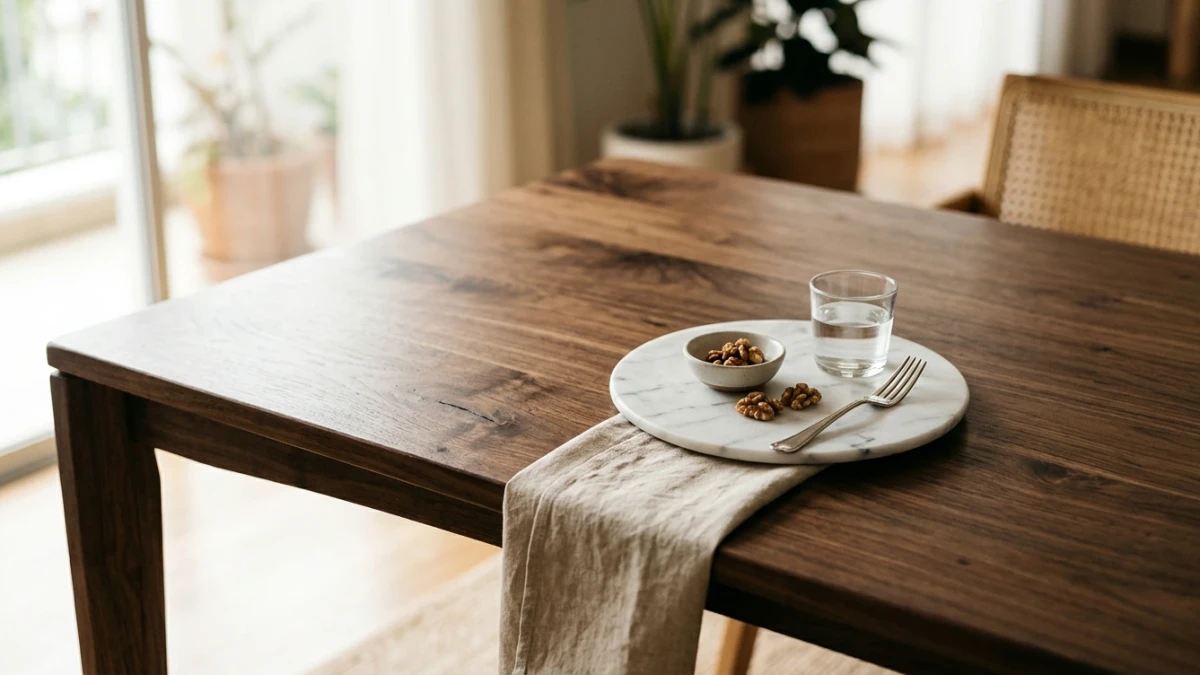
Walnut furniture gets its reputation from the wood itself. The heartwood runs a deep chocolate brown with streaks of warmer and darker tone through it, so a walnut table or sideboard looks rich straight off the workbench, before any stain goes near it. That natural colour is why designers reach for it when a room needs one grounded, confident piece.
This guide walks through why walnut reads as luxurious, which pieces suit it best, how to style it without weighing a room down, and how to care for it in a humid Malaysian home. It comes from our side of the trade: building furniture to order, choosing boards and matching grain across a tabletop.
Why walnut's deep grain feels luxurious
Walnut feels luxurious because the colour and figure are built into the wood, not applied on top. Black walnut heartwood varies from light to dark brown with flowing cathedral patterns, and it rates around 1,010 lbf on the Janka hardness scale (The Wood Database). That combination of depth and firmness is hard to fake with stain.
Part of the appeal is contrast within a single board. Walnut moves between lighter and darker streaks, sometimes with purple or grey undertones, so a wide tabletop reads as a piece of nature rather than a flat panel. Light catches the grain differently as you move around the room.
The hardness matters too. At roughly 1,010 lbf, walnut sits a little below oak but well within everyday hardwood range, so it handles dining and living-room use while staying pleasant to shape and detail. That workability is one reason it has been a cabinetmaker's wood for generations. If you are weighing it against other species, our guide on oak versus walnut and other wood tones breaks down how each one behaves and looks.
One honest note: walnut heartwood tends to lighten with age and light exposure. Over years, a very dark piece mellows toward a warmer brown. Many owners like that softening. It is worth knowing before you choose, especially for a piece that sits in bright, sunlit areas.
Best pieces to make in walnut
Walnut earns its place in larger, visible pieces where the grain has room to show. Dining tables, sideboards, coffee tables, bed frames and lounge chair frames all let the figure become the feature. On small or heavily carved items, the pattern gets lost and the cost rarely pays off.
A dining table is the clearest example. A wide walnut top is essentially a display surface for the grain, and it sits at the centre of the room where people see it daily. The wood's firmness suits a table that takes plates, elbows and years of meals, and the proportions of the top change how the whole room feels.
Sideboards and cabinets are the next natural fit. A long, low cabinet gives you a broad face of continuous grain, and walnut doors look substantial without heavy ornament. Bed frames work for the same reason: a solid headboard becomes a quiet focal point.
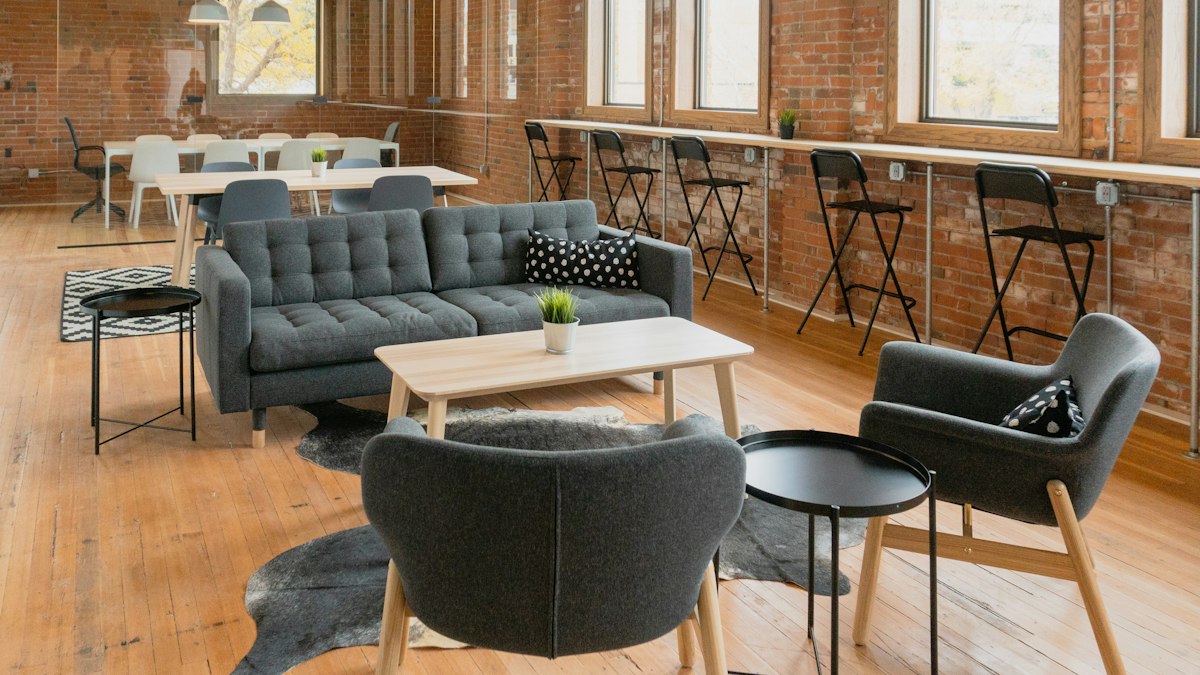
Walnut also reads well as a frame wood on seating. On a lounge or accent chair, exposed walnut arms and legs frame the upholstery and tie the piece to the rest of the room's wood tones. The timber's workability lets a maker shape comfortable curves and crisp edges without fighting the material.
A practical point on construction: because walnut boards carry so much visible figure, grain matching across a top or a cabinet face is where the craft shows. Good matching makes a multi-board top read as one piece. Poor matching looks busy and cheap, whatever the wood cost.
Styling walnut with lighter accents
Walnut looks its best when lighter elements sit around it. Because the wood is dark and visually heavy, pairing it with pale and natural textures keeps a room balanced instead of sombre. Off-white walls, light upholstery, pale oak, rattan and marble all give the eye somewhere to rest.
A few pairings that work in practice:
- Walnut and marble. A walnut base under a pale stone top is a classic for a reason. The dark grain grounds the cool, light surface.
- Walnut and rattan. Woven cane or rattan adds a lighter, airy texture that reads well in warm climates and softens all that dark timber.
- Walnut and off-white upholstery. Cream or oatmeal sofa and chair fabrics let a walnut coffee table or sideboard stand out as the room's anchor.
- Walnut and brass or matte black. Small metal accents, legs, handles, lighting, sharpen the look without competing with the grain.
The guiding idea is restraint. One or two strong walnut pieces per room is usually enough. If every surface is dark wood, the space closes in, which matters in a compact condo or apartment where light is already at a premium. Let the walnut be the feature and keep the supporting cast light.
Scale matters as well. In a smaller living area, a walnut coffee table plus lighter seating holds the look. In a larger open-plan space, you can run a walnut dining table and a walnut sideboard together, provided the walls and soft furnishings stay bright.
Caring for walnut in humid conditions
Caring for walnut in a humid climate comes down to steady conditions and sensible habits rather than constant effort. Solid wood responds to the moisture in the air, taking on more in humid periods and releasing it in drier, air-conditioned rooms. Keeping those swings gentle is what protects a piece long term.
Wood-stability references generally point to a moderate indoor humidity band, often cited around 30 to 50 percent relative humidity, as the comfortable zone for furniture. Malaysian homes sit above that for much of the year, so the goal is to avoid sharp, repeated swings rather than to chase a lab number.
A few practical habits:
- Keep walnut out of direct aircon airflow. A vent blowing straight onto a tabletop dries one face faster than the rest, which encourages movement. Position the piece a little off the draught.
- Avoid long, direct sun. Strong sunlight speeds up the natural lightening of walnut and can dry the surface unevenly. Curtains or a slight repositioning help.
- Wipe spills quickly. Standing water is the enemy of any wood finish. A soft, slightly damp cloth, then a dry one, handles most spills.
- Dust with the grain using a soft dry or barely damp cloth, and skip harsh or ammonia-based cleaners.
- Re-oil when the surface looks dry. On an oiled finish, a light refresh every so often keeps the grain looking full. A lacquered or matte-sealed finish needs less of this.
Good drying and construction do most of the heavy lifting here. Properly kiln-dried walnut, built with joinery that allows for seasonal movement, stays stable in a humid home. Much of a piece's longevity is decided before a board ever becomes a table.
Custom walnut furniture at Nicchris
Made-to-order is where walnut makes the most sense. Because the wood rewards careful board selection and grain matching, building a piece to your room lets those decisions happen with your space in mind rather than a warehouse average. You choose the dimensions, the finish sheen and the edge detailing.
That flexibility is practical in local homes. A dining table can be sized to an exact condo layout, a sideboard built to fit a specific wall, a bed frame scaled to the room. At our Sungai Buloh workshop in the Klang Valley, we design and make furniture in-house, so the person selecting the boards is close to the person building the piece. Our walkthrough of how custom furniture works in Sungai Buloh lays out the steps from first idea to finished delivery.
Walnut is not the only honest choice, and it is not automatically better than a well-made veneer or another species. It is the right choice when you want a rich, grounded tone with real depth of grain, in a piece large enough to show it off.
If a walnut table, sideboard or lounge chair fits the room you are planning, a good next step is to measure your space and note the proportions you want. Bring those measurements along when you browse the Nicchris collections, or arrange a visit to our Sungai Buloh showroom by appointment, and we can talk through the boards, the finish and the build.