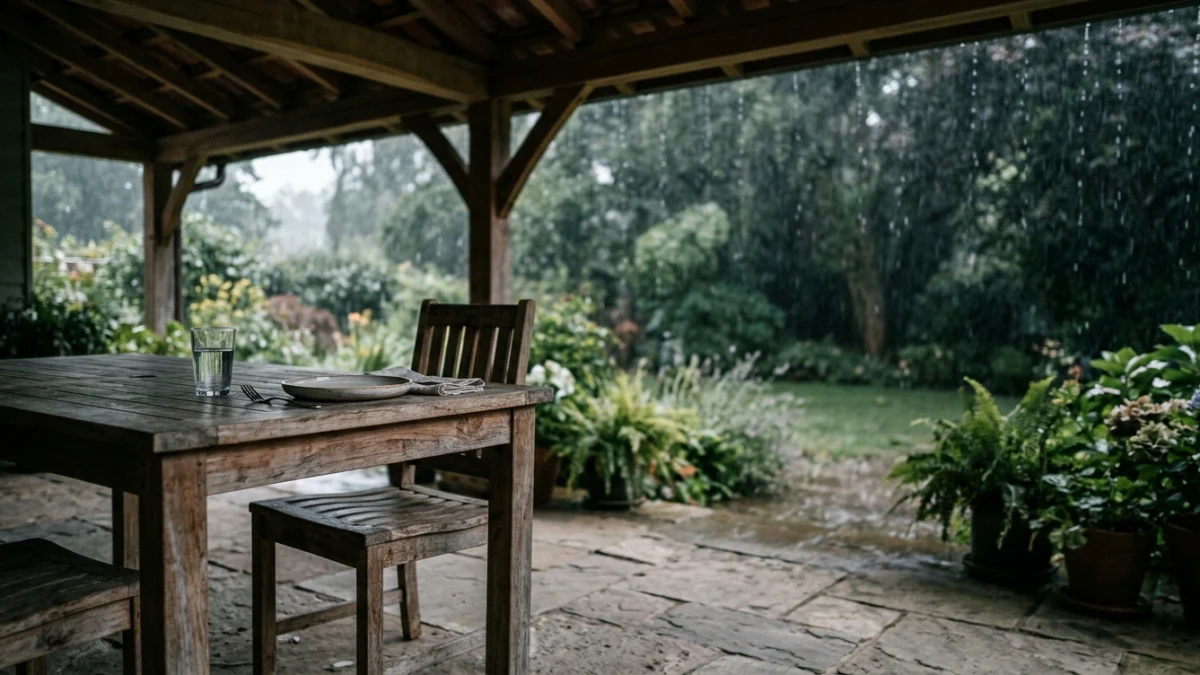
If you want contemporary outdoor dining furniture that survives a Malaysian year, choose teak, powder-coated aluminium or quality synthetic rattan, and give it a shaded spot. Those materials shrug off heat, humidity and daily downpours in a way that ordinary indoor pieces moved outside simply cannot. This guide covers what to buy, how to size it for your space, how to style it, and how to keep it looking new.
Outdoor dining here is less a seasonal treat and more a daily option, from breakfast on a condo balcony to weekend lunches in a landed-home garden. The furniture just has to be built for the conditions.
Why Weather-Ready Materials Matter in Malaysia
Malaysia's climate is hard on furniture in three ways at once: constant warmth, very high humidity, and frequent rain. Average relative humidity sits between roughly 82 and 86 percent across the country, and states see anywhere from about 130 to 194 rainy days a year, according to WorldData's climate summary for Malaysia. That is close to one wet day in every two.
High humidity keeps surfaces damp long after the rain stops, which invites mould, mildew and corrosion. Untreated metals rust, cheap woods swell and crack, and foam cushions never fully dry. Pieces designed for air-conditioned interiors fail quickly in this environment, which is why material choice does most of the work in an outdoor set.
Direct sun adds a second strain. UV exposure fades colours and breaks down low-grade plastics and fabrics over time. A material that handles both soaking and strong sun is what separates furniture that lasts years from furniture you replace every monsoon.
Best Materials for Contemporary Outdoor Dining Furniture
Three materials dominate contemporary outdoor dining furniture for good reason. Each has a distinct look and a distinct maintenance profile.
Teak
Teak is the classic choice for a reason. The timber carries natural oils and silica that make it highly resistant to water, insects and fungal decay, so it can live outdoors untreated for decades. Left alone, it weathers to a soft silver-grey patina; oiled occasionally, it keeps its warm honey tone.
Teak reads as warm and organic, which suits Malaysian homes leaning into natural textures and tropical greenery. It is the heaviest and usually the priciest option, but it is also the one most likely to outlast everything else on the patio. If you are drawn to timber elsewhere in the home, the same principles in How to Care for Wood Furniture in Malaysia's Climate apply outdoors too.
Powder-Coated Aluminium
Powder-coated aluminium is the practical modern pick. Aluminium does not rust, and a baked-on powder finish seals the surface against moisture while adding colour. The result is light enough to move for cleaning yet stable enough not to blow around in a storm.
This material fits a sleek, minimal aesthetic: slim profiles, clean lines, matte black or soft neutrals. It needs almost no maintenance beyond a wipe-down, which makes it ideal for busy households and higher-floor balconies where hauling heavy furniture is a chore.
Synthetic Rattan
Synthetic rattan (resin woven over an aluminium frame) delivers the woven, textural look of natural cane without the rot. Unlike real rattan, it does not absorb water or break down in the sun when it is UV-stabilised. It brings softness and a resort feel to a dining set, and pairs naturally with the kind of relaxed, layered interiors covered in Japandi Style: Minimalism for Malaysian Homes.
Quality varies widely here. Cheap resin yellows and cracks; better woven grades stay flexible and colourfast for years, so this is a category where paying more genuinely buys longevity.
How to Size an Outdoor Dining Table
Getting the dimensions right matters more outdoors, where you are usually working with an awkward balcony, a narrow patio or an open garden that swallows undersized pieces.
A reliable starting point is about 60 cm of table width per person, plus enough depth to share platters down the centre. Just as important is circulation space: leave at least 90 cm of clearance behind each chair so people can pull out, sit and walk past without bumping the railing or the wall.
- Balconies: Go compact. A round or square two to four seater, roughly 70 to 90 cm across, keeps the space usable. Round tables are forgiving because they have no corners to knock into.
- Patios: A rectangular four to six seater suits most covered patios. Rectangles sit neatly against a wall and seat more people per square metre.
- Gardens: You have room to go large. A six to eight seater anchors the space, and an extendable table handles guests without dominating day to day.
If your dining chairs do double duty indoors and out, the comfort and proportion advice in Dining Chairs: How to Pick Style and Comfort is worth a read before you commit.
Styling Outdoor Dining to Match Your Interior
The goal is for your balcony or patio to feel like an extension of the home, not a disconnected add-on. The simplest way to achieve that is to carry your indoor palette outside.
Pick up one or two colours from the adjacent room, your sofa fabric, a rug, the wall tone, and repeat them in cushions, tableware or planters. Match wood tones too: a teak table reads as intentional when it echoes timber you already use inside. For a cohesive, designer feel, the contemporary approach that Nicchris takes across its collections is to keep lines clean and let material and texture do the talking rather than loud colour.
A few touches lift an outdoor set quickly:
- Low planters with tropical foliage soften hard edges and screen railings.
- Weatherproof cushions in a tight palette add comfort without clutter.
- A single statement light, a lantern or a string of warm bulbs, turns the space into an evening room.
Treat the outdoor table like any other room: anchor it, light it, and give it a reason to be used after dark. Nicchris designs its indoor and outdoor pieces to share a visual language, so a patio dining set can sit comfortably beside the living room it opens onto.
Care and Maintenance to Keep Furniture Looking New
Even weather-ready materials last longer with light, regular care. The single biggest factor is placement: a covered or semi-covered spot limits standing water, mildew and fading far more than any premium material claim on its own.
Build a simple routine:
- Weekly: Wipe surfaces with a damp cloth and mild soap to clear dust, pollen and bird mess before they stain.
- After heavy rain: Tip water off tabletops and seats so it does not pool, and let cushions dry fully before storing them.
- Seasonally: Check and tighten bolts, and clear drainage holes on aluminium and rattan frames.
Teak needs the least intervention: a scrub with soapy water once or twice a year is enough, and oiling is purely a cosmetic choice if you want to hold the original colour. Powder-coated aluminium only needs a wipe-down, with a touch-up on any chips to stop moisture reaching the metal. Synthetic rattan rinses clean with a hose and a soft brush. Store or cover cushions between uses, since fabric and foam are almost always the first things to fail outdoors.
When you are ready to buy, see the pieces in person if you can. Checking weight, finish and build quality in a showroom tells you far more than a product photo, and the practical pointers in Furniture Shops Near Me: A Malaysia Shopping Guide will help you compare options and bring home an outdoor dining set that still looks new a few monsoons from now.